
Your first planted tank doesn't have to be complicated — start here.
Live plants are one of the best things you can add to a freshwater aquarium. They help clean the water, reduce stress in fish, give fry and shrimp a place to hide, and make your tank look incredible. The good news? You don't need fancy equipment or a green thumb to get started. Every plant on this list can thrive under basic aquarium lighting without CO2 injection — meaning one less thing to worry about as a beginner. Below are the top 10 aquarium plants for beginners.
A note on CO2 - None of the plants on this list require injected CO2 to survive and grow. That makes them an ideal starting point. As your confidence grows, CO2 can unlock faster growth and more vivid color — but it's completely optional here.
Here are the Top 10 Aquarium Plants for Beginners
01 Anacharis
Elodea densa
Low light
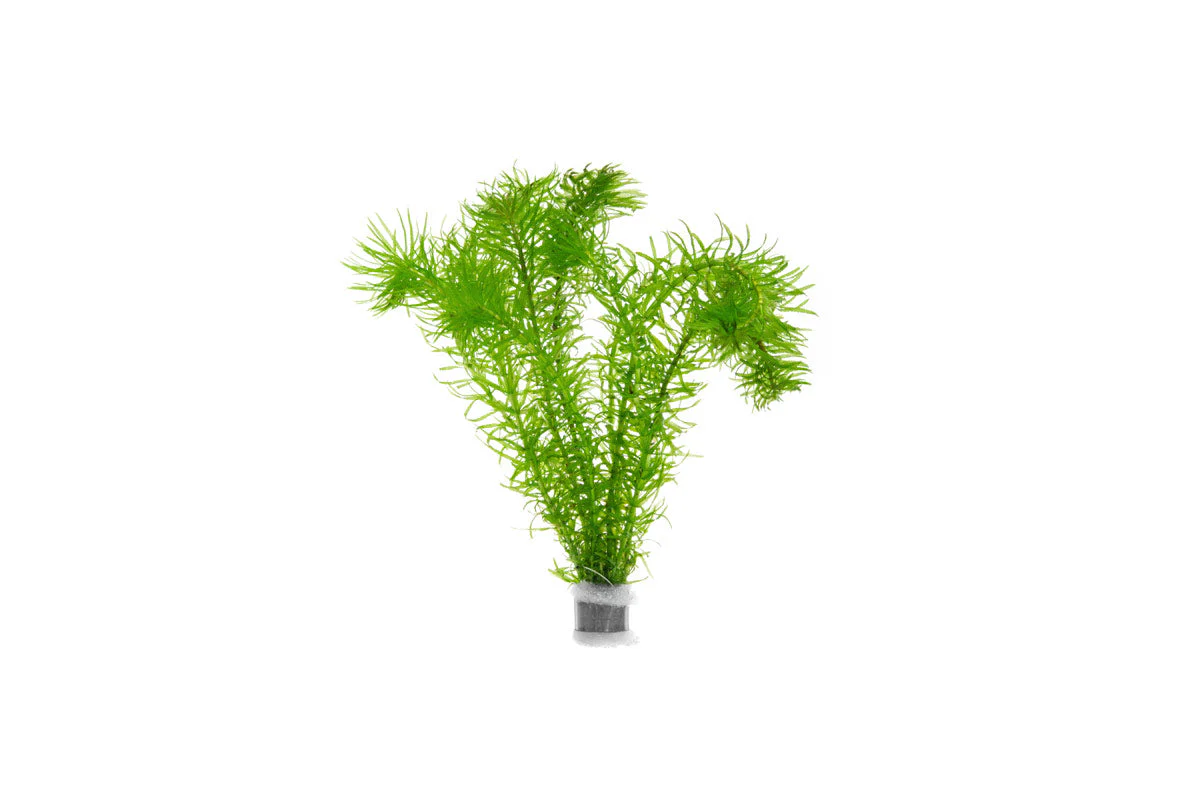
Anacharis is the plant we recommend most often to first-time plant keepers — and for good reason. It grows fast, it's forgiving, and it works hard in your tank. Because it grows quickly, it pulls excess nitrates out of the water, which helps keep things cleaner between water changes.
It can be planted in your substrate or left floating freely. Either way, it'll grow. Standard LED aquarium lighting is all it needs.
Anacharis is one of the best natural nitrate reducers you can add to a beginner tank. A few stems go a long way.
02 Java Fern
Leptochilus pteropus
Low light Attach to hardscape
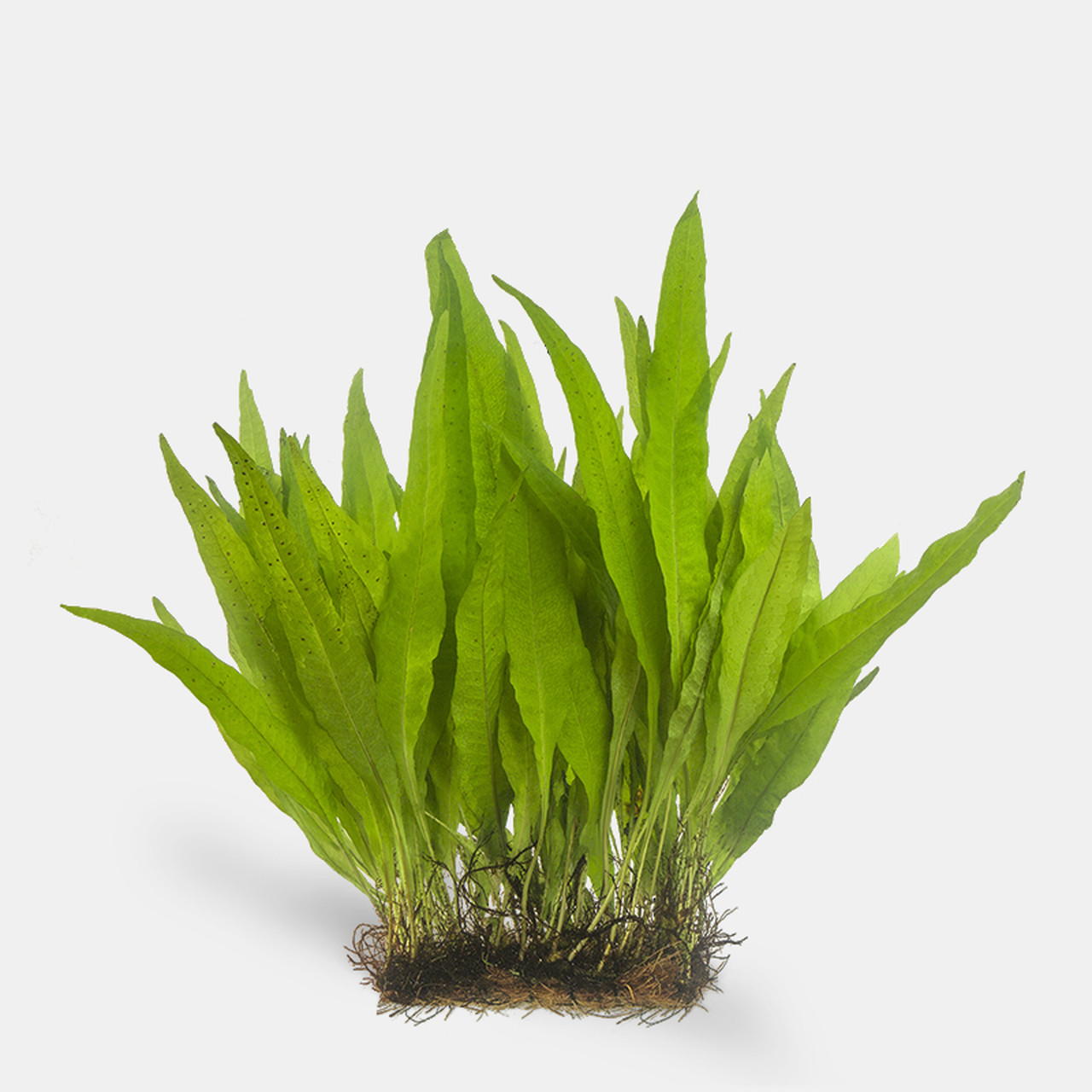
Java Fern is a hobby staple for a reason. It's beautiful, nearly indestructible, and does well in a wide range of water conditions. The key thing to know: do not bury it in your substrate. Java Fern is an epiphyte — it attaches to surfaces rather than rooting in soil. Tie or super glue it to a piece of driftwood or rock instead.
If you bury the thick green stem (called the rhizome), the plant will rot. Attached to hardscape, it'll grow happily for years.
We carry Java Fern regularly — it pairs beautifully with darker driftwood and fits almost any tank size.
03 Anubias
Anubias barteri
Low light Attach to hardscape
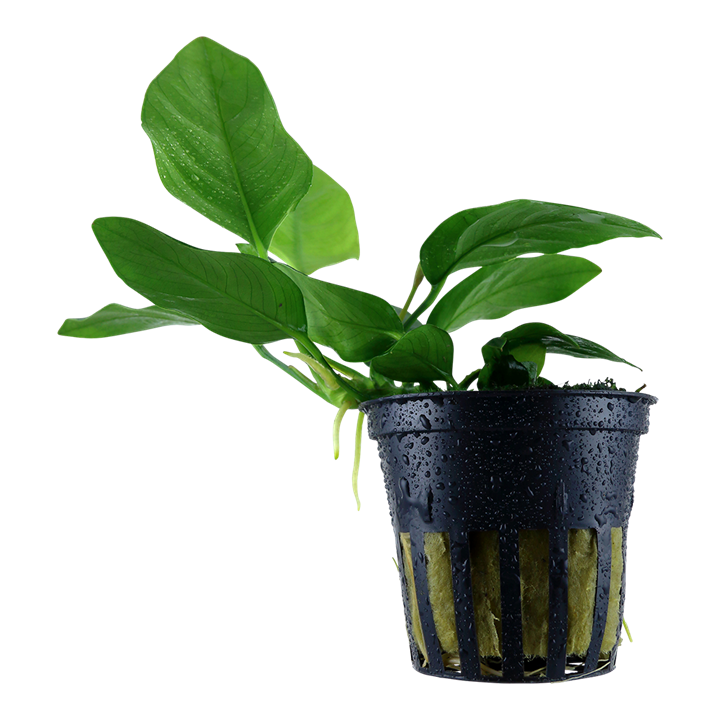
Anubias is among the most adaptable plants in the freshwater hobby. Like Java Fern, it's an epiphyte — it wants to be tied or glued to driftwood or stone, not buried in the substrate. It'll even grow partially out of the water if you like that emerged look.
Anubias is slow-growing, which is actually a benefit for beginners — less trimming, less maintenance. It's also one of the few plants that can handle very low light without melting away.
Place Anubias in a lower-flow area of your tank. High flow right on the leaves can stunt growth over time.
04 Guppy Grass
Najas guadalupensis
Low light Float or plant
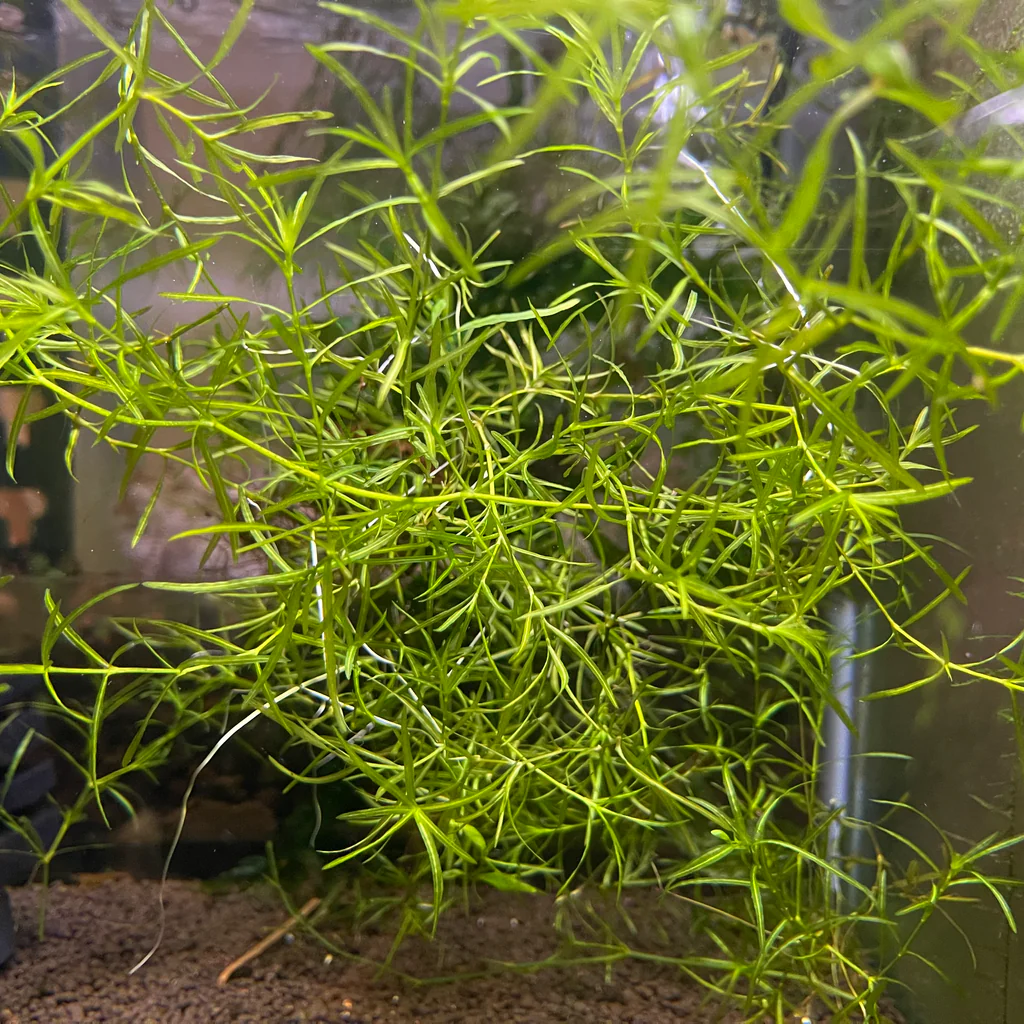
Guppy Grass is a fantastic choice if you keep shrimp, livebearers, or any fish that produce fry. It grows into dense, lush clumps that give baby fish and shrimp a safe place to hide and forage.
It's flexible — you can root it into your substrate or let it float freely near the surface. Just handle it gently; the stems break easily. That's actually a feature, not a bug: broken stems grow into new plants.
Guppy Grass is one of the best fry savers out there. If you breed livebearers, keep a clump in the tank.
05 Hornwort
Ceratophyllum demersum
Low light Float or anchor
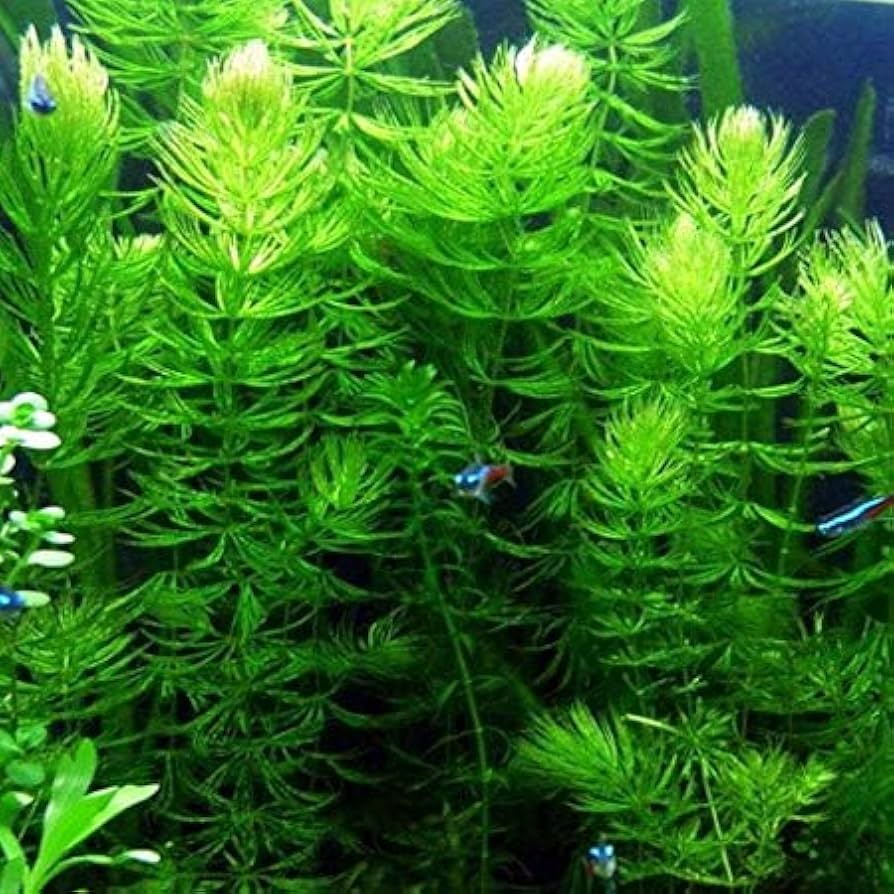
Hornwort is a rootless plant — it doesn't need substrate at all. You can anchor it lightly to the bottom of the tank or let it float freely near the surface. It's one of the fastest-growing plants on this list, which makes it an excellent nutrient sponge. It pulls waste products out of the water column quickly, helping to outcompete algae before it has a chance to take hold.
Be ready to trim it. Hornwort grows enthusiastically and can take over a tank if you're not keeping up with it.
Everything you need to know about cherry shrimp is right here!
Hornwort is especially useful in tanks that are still cycling or dealing with an algae problem. It's a workhorse.
06 Cryptocoryne
Cryptocoryne wendtii
Low light Benefits from rich substrate
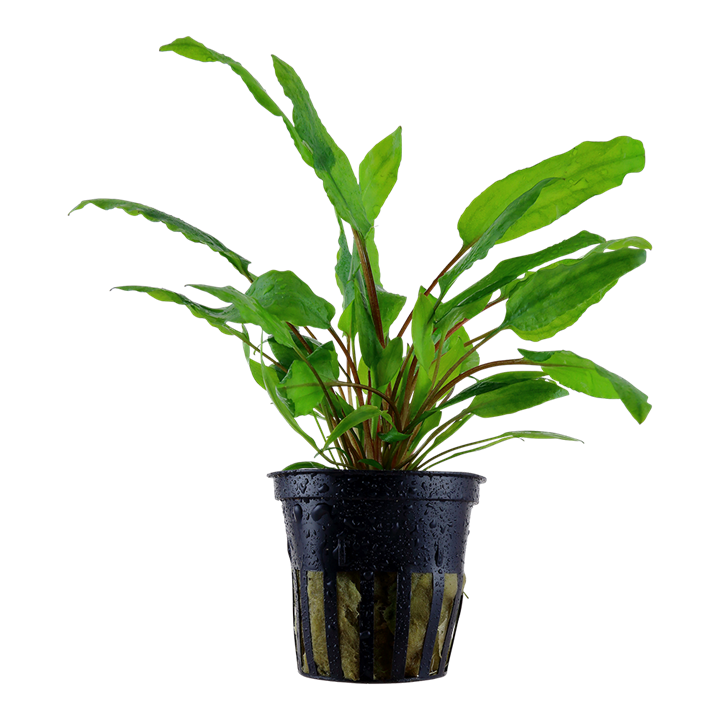
Crypts, as hobbyists call them, are one of the most popular planted tank species for good reason. They're stunning, they come in a range of colors and sizes, and they thrive in low-light conditions where other plants struggle.
There's one thing to know upfront: Crypts sometimes experience what's called "Crypt melt" when moved to a new tank — leaves may yellow and fall off as the plant adjusts. Don't panic and don't throw it out. The roots are fine, and new growth will come back stronger. Crypts reward patience.
For best results, plant them in a nutrient-rich substrate. We carry Fluval Stratum, Eco-Complete, UNS Contrasoil, and Flourite — all excellent options that will keep your Crypts fed without the need to constantly dose liquid fertilizers.
When Crypts melt, trim the dead leaves and leave the plant in place. It will bounce back.
07 Pygmy Chain Sword
Helanthium tenellum
Low to medium light Carpeting plant Benefits from rich substrate
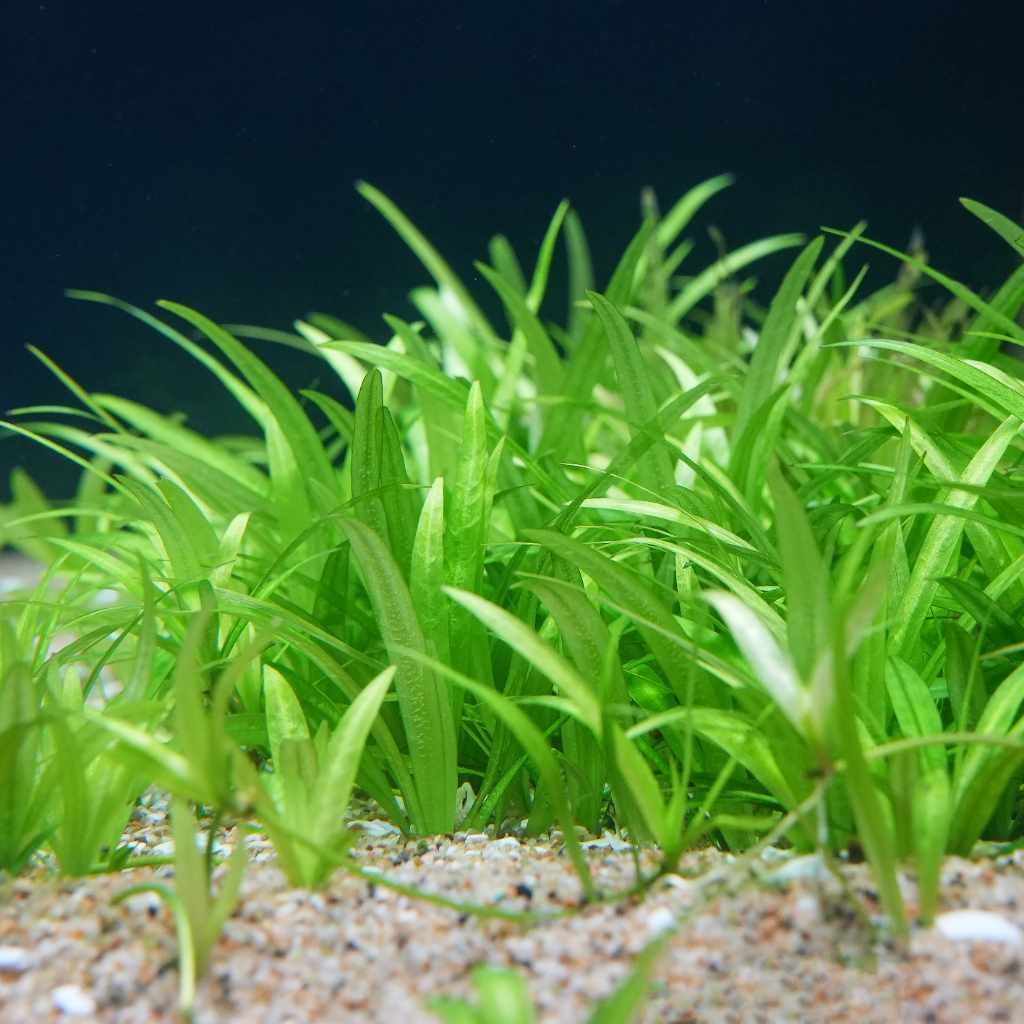
If you've ever seen a lush green carpet across the bottom of an aquascape and wanted to recreate it, Pygmy Chain Sword is your most beginner-friendly option. It stays short, spreads via runners (small horizontal shoots that produce new plants), and doesn't demand CO2 or intense lighting the way many other carpeting plants do.
It does best when planted in a nutrient-rich substrate — Fluval Stratum, Eco-Complete, Flourite, or UNS Contrasoil will all give it what it needs to spread confidently across your tank floor.
Plant individual stems a couple of inches apart and let the runners fill in the gaps. It's slow at first, but worth the wait.
08 Pearlweed
Hemianthus micranthemoides
Low to medium light
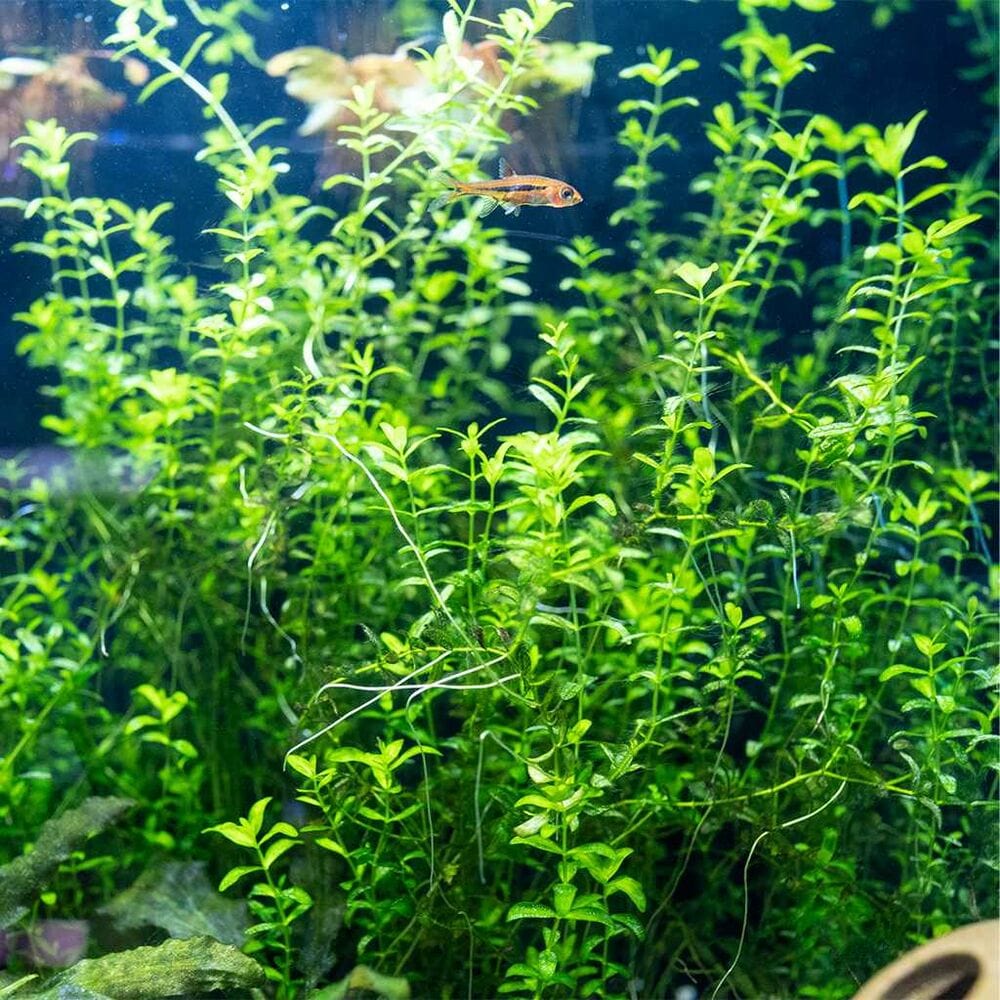
Pearlweed is one of the most versatile plants on this list. Depending on how often you trim it, it can work as a foreground carpet, a midground accent, or a lush background filler. It grows quickly and bounces back well from trimming, making it an ideal plant for beginners who want to experiment with aquascaping layouts.
It's forgiving of varying water parameters and doesn't require a specialized setup to look good. Just keep up with trims and it'll stay tidy.
Trim Pearlweed regularly to encourage lateral growth and a fuller, bushier appearance rather than tall and leggy stems.
09 Stargrass
Heteranthera zosterifolia
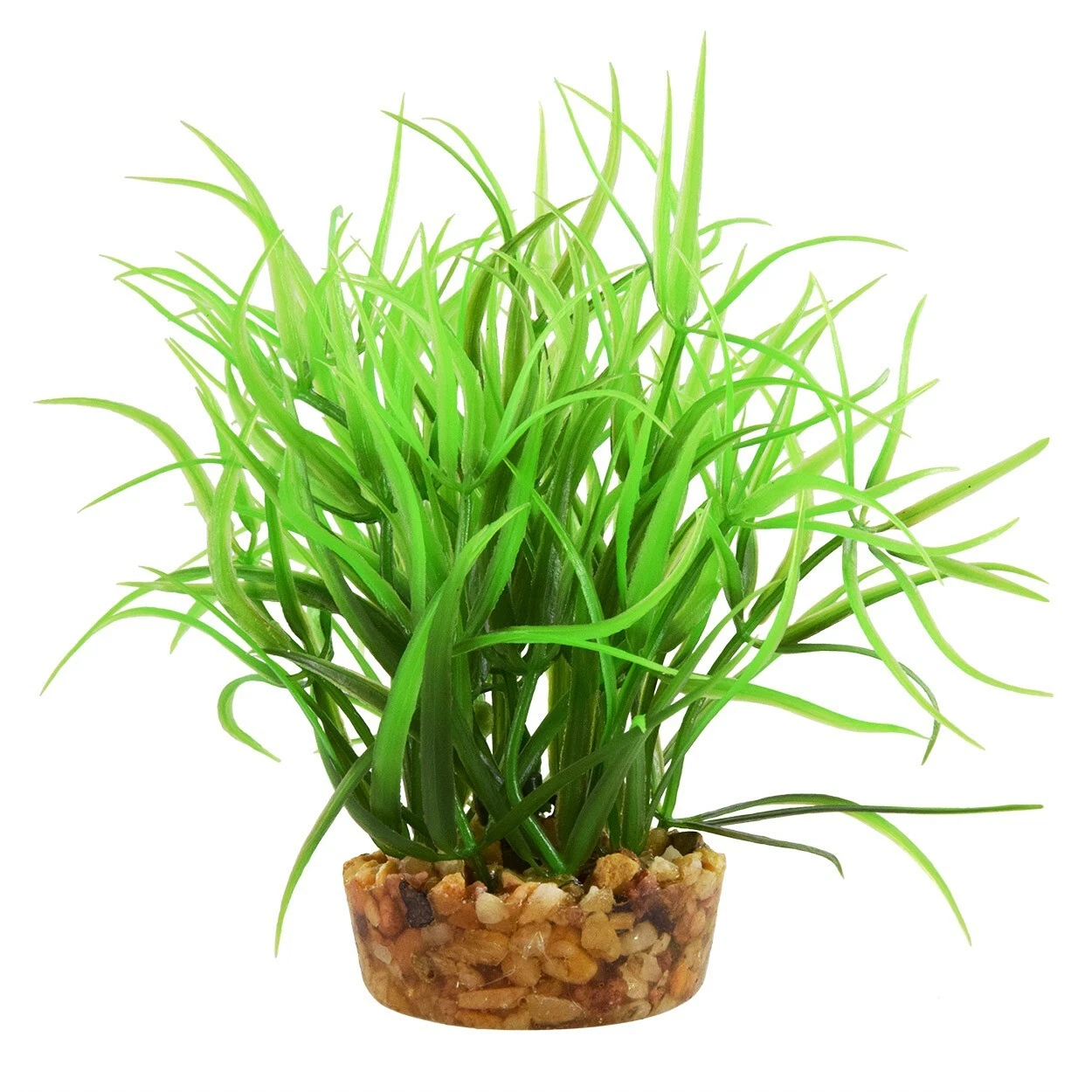
Low to medium light
Stargrass brings a distinctive look to an aquascape — bushy, layered, and covered in small star-shaped leaves that create a texture you won't get from most beginner plants. It's a great choice for adding visual depth to the mid or background of your tank without needing high-intensity lighting or a complex setup.
It grows at a moderate pace and is tolerant of a range of water conditions, which makes it a solid pick while you're still dialing in your tank.
Stargrass looks especially good planted in clusters rather than individual stems — let it fill out for maximum impact.
10 Amazon Frogbit
Limnobium laevigatum
Floating plant No planting needed
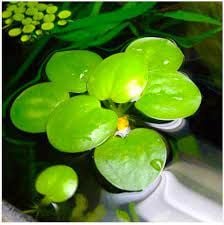
Floating plants are arguably the easiest category of aquarium plants to keep, and
Amazon Frogbit is one of the best. It sits at the surface, drawing CO2 directly from the air above — no injection required. The long, trailing roots that hang below the surface provide natural cover for shy fish and offer shrimp an excellent place to graze.
Frogbit grows quickly and helps filter the water by absorbing nutrients directly through its roots. It also diffuses surface light, which some fish (particularly those from shaded habitats) really appreciate.
Keep surface agitation moderate. Too much turbulence from a strong filter output can damage Frogbit over time.
Ready to start your planted tank?
We keep a rotating selection of live plants in stock at Fins For Grins in Broken Arrow. Stop in, and our team can help you pick the right plants for your tank size, lighting, and fish.
We're at 1312 N. Elm Pl, Broken Arrow, OK — or give us a call at (918) 578-9142. We'd love to help you get growing.