
Fins For Grins | Broken Arrow, OK
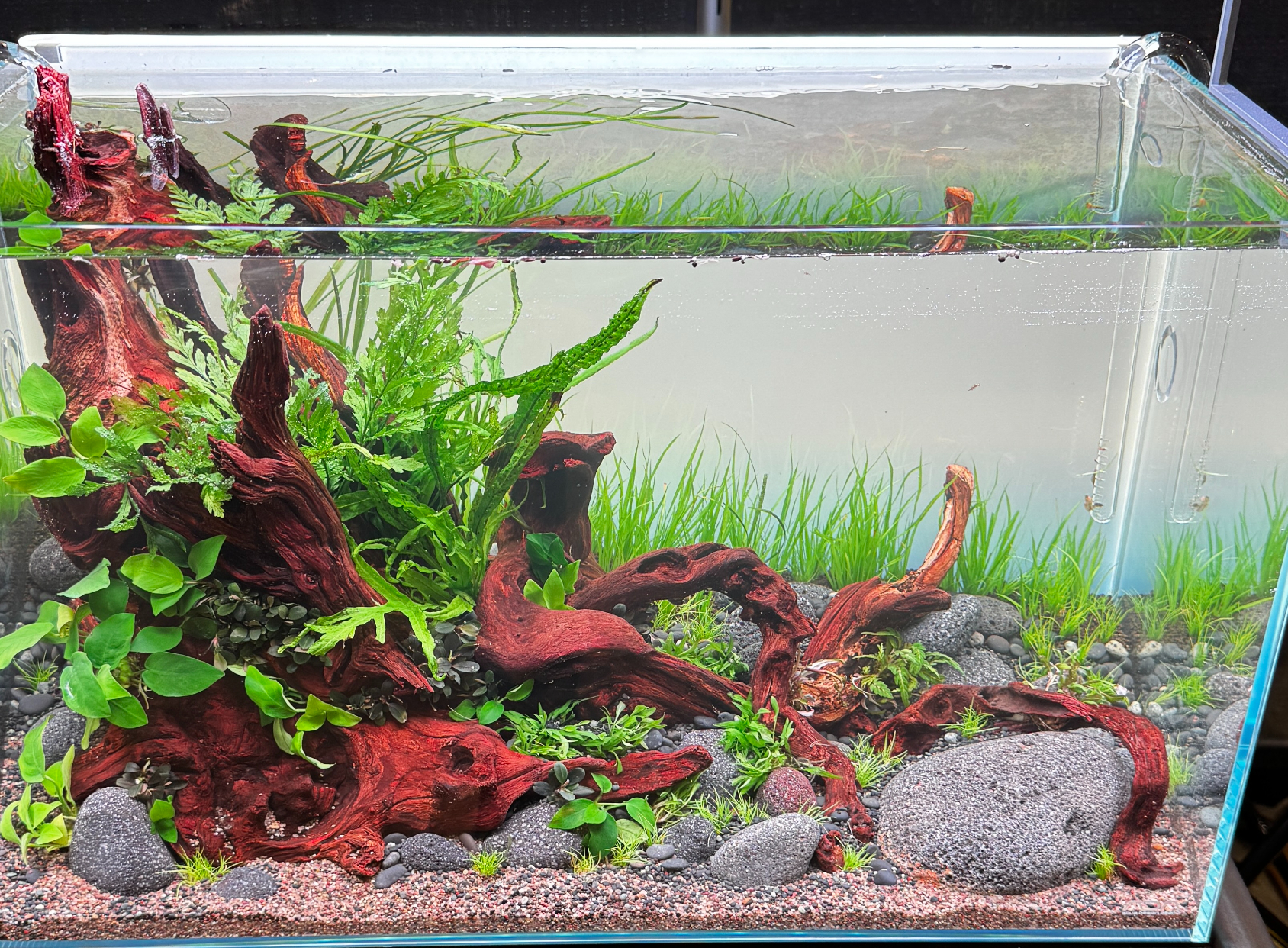
A customer walked into Fins For Grins not long ago with a plan.
He had found a large stump near a creek by his house. In his mind, it was going to become the centerpiece of his aquarium. It had size, shape, and character. It looked natural. It looked like the kind of thing many hobbyists would love to build a tank around.
Before it went into the aquarium, he decided to trim one root from the bottom so the stump would sit flat.
The moment he cut into it, the answer became obvious.
The color of the wood changed. The smell came out strong.
It was cedar.
We talked him out of using it, and we were glad he asked before putting it in the tank. His fish never had to find out how bad of an idea it would have been.
We tell this story because driftwood is one of the best additions for a freshwater aquarium when the right wood is chosen. It gives fish cover. It gives shrimp and plecos grazing surfaces. It helps a tank look more natural. It gives plants something to grow around. It also brings texture and structure to the aquarium in a way plastic decorations rarely do.
The key phrase is “the right wood.”
Some wood is excellent for aquariums. Some wood is risky. Some wood should never go near fish, shrimp, snails, or frogs.
This guide will help you understand why driftwood is useful, which types we recommend, which woods to avoid, how to think through found wood, and how to prepare driftwood before it goes into your aquarium.
Why Driftwood Matters in a Freshwater Aquarium
Driftwood does more than make a tank look good. It changes how fish use the space.
A bare aquarium leaves fish exposed. Even peaceful fish often feel more secure when they have places to move around, rest under, or retreat behind. Wood breaks up open swimming areas. It creates shade, cover, and boundaries. In community aquariums, this often leads to calmer behavior because every fish is not forced into the same open space.
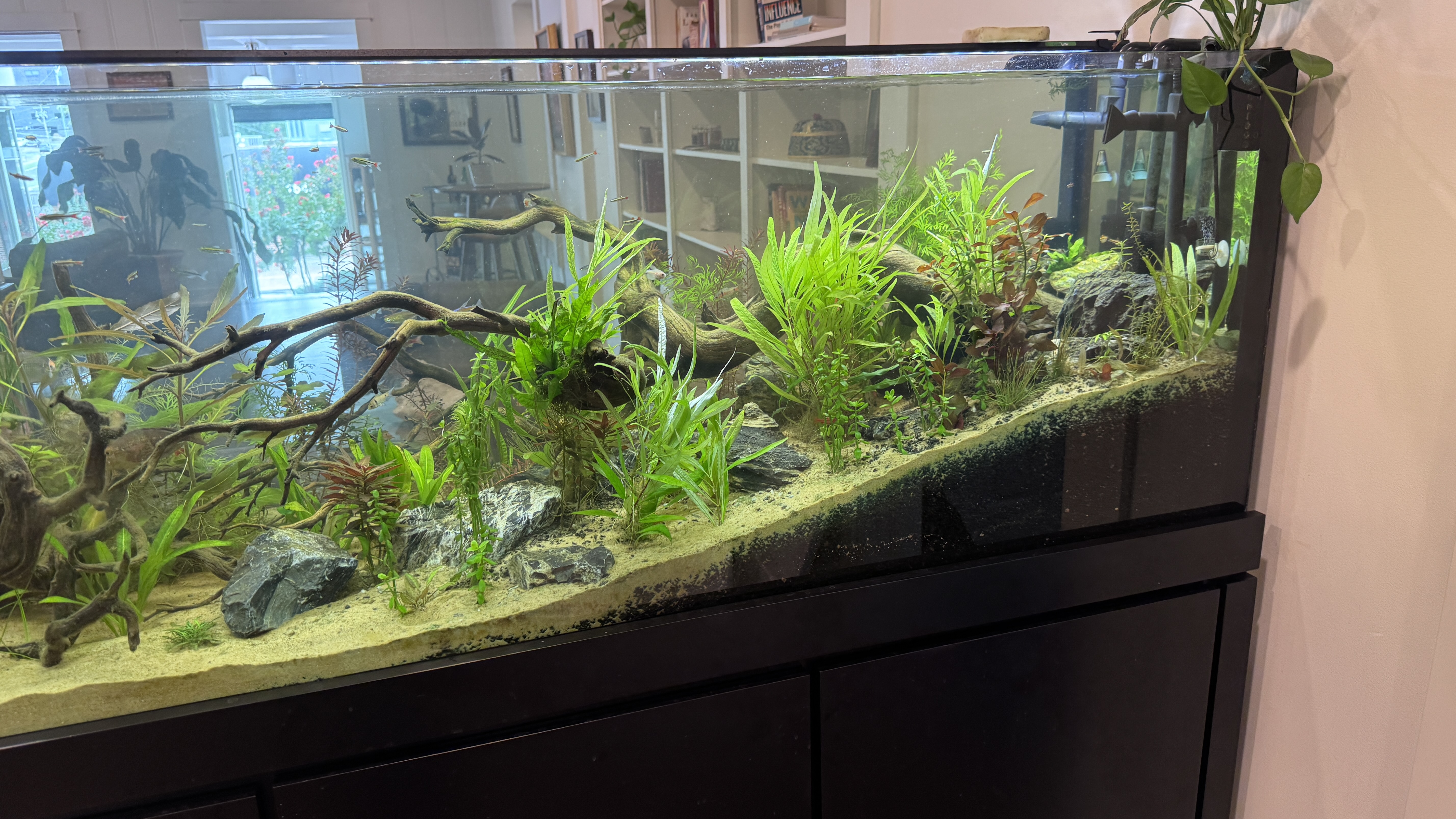
This matters for shy fish like tetras, rasboras, dwarf cichlids, discus, gouramis, and many bottom dwellers. It also matters for fish with stronger personalities. A piece of wood in the right place gives fish a visual barrier. One fish does not have to stare at another fish across the whole tank all day. In many setups, better structure means less chasing and more natural movement.
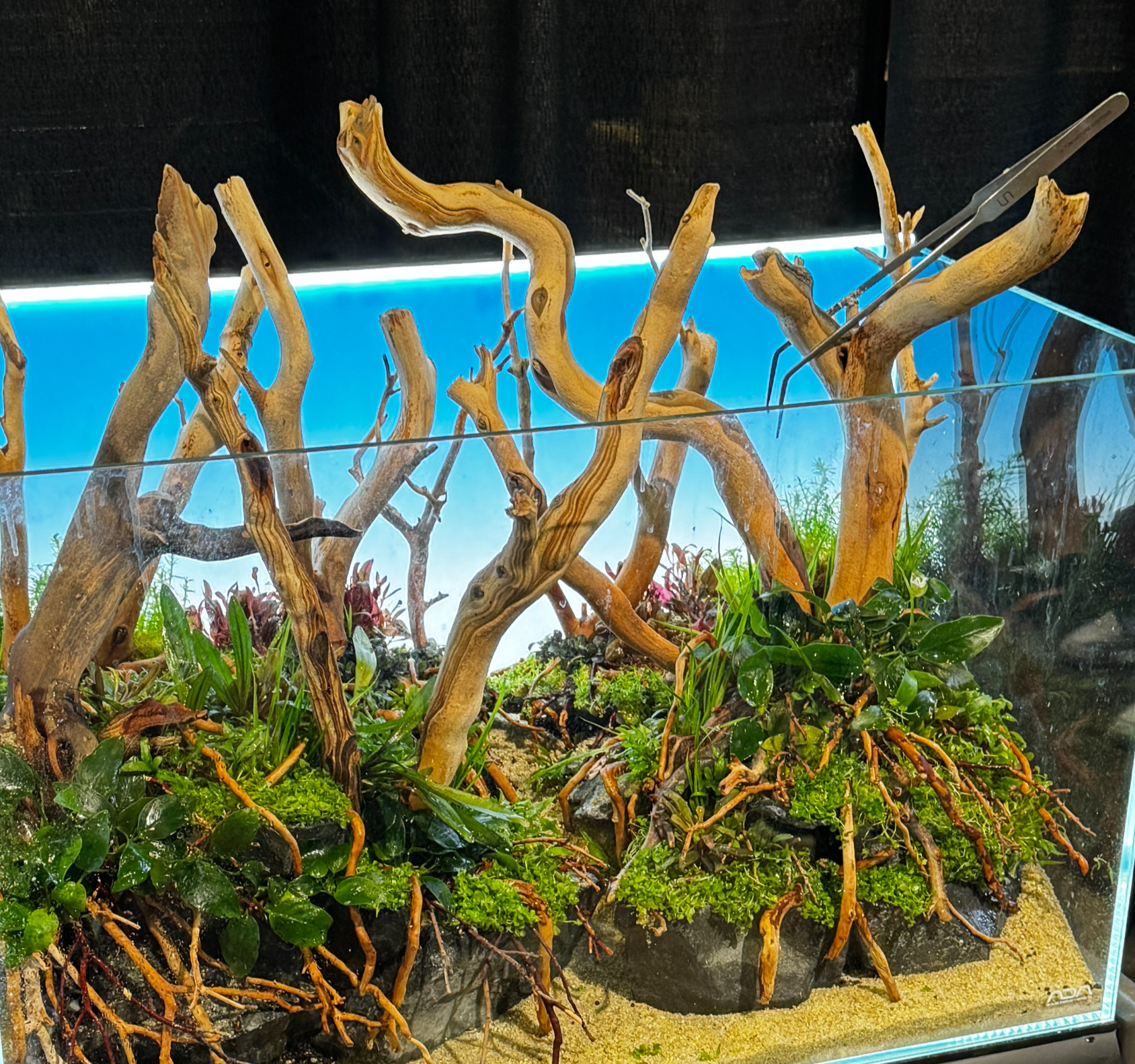
Wood also becomes part of the biology of the aquarium. Over time, the surface grows biofilm. New hobbyists often notice a white or gray film on new wood and worry something has gone wrong. Most of the time, it is normal biofilm. Shrimp, Otocinclus, plecos, and many small fish graze on it. In shrimp tanks and pleco tanks, this is one of the biggest reasons real wood is so helpful.
Then there are tannins. Tannins are natural compounds released by wood, leaves, seed pods, and other botanical materials. They give water a light tea color. Some hobbyists love this look. Others prefer clearer water. Neither choice is wrong. What matters is understanding what is happening and whether it fits the fish in your care.
Tannins are common in blackwater-style aquariums. Fish like bettas, discus, cardinal tetras, rams, Apistogramma, and many other South American species often look beautiful in a tank with warm, tannin-stained water. At the same time, driftwood should not be treated like a dependable water chemistry tool. It might nudge pH lower in water with low KH, but it does not remove minerals from hard tap water. If your water is hard and alkaline, wood alone will not make it soft.
The best reason to add driftwood is not to chase a number on a test kit. Add it for structure, shelter, grazing surface, and a more natural setting for freshwater fish.
What Tannins Do and What They Do Not Do
Tannins create a lot of confusion in the aquarium hobby.
When a customer brings us a water sample and says, “My water turned brown,” one of the first questions we ask is whether new wood was added. If the answer is yes, brown water is usually not an emergency. It is often the wood releasing tannins.
Tannins are not dirt. They are not a sign of neglect. They are part of what happens when natural wood soaks underwater.
In some tanks, tannins are welcome. They give the water a softer visual look. They also pair well with fish from shaded, plant-heavy, wood-heavy habitats. Many hobbyists keep blackwater aquariums on purpose because the fish look relaxed, colorful, and comfortable in those conditions.
The part we want to be careful with is water chemistry.
You will often hear people say driftwood “lowers pH” or “softens water.” Sometimes pH shifts lower, especially in aquariums with low KH. KH acts like a buffer. When KH is low, pH moves more easily. When KH is high, pH resists change. In harder water, a piece of driftwood might stain the water while barely changing pH at all.
Soft water is different. Softening water means reducing dissolved minerals. Driftwood does not reliably remove those minerals. If you need softer water for sensitive fish, the better conversation is about source water, RO water, remineralizing, and stability.
This is why we encourage testing. Do not guess based on water color. Tea-colored water does not always mean soft water. Clear water does not always mean hard water. Test strips or liquid tests give you a better picture.
For most freshwater community tanks, tannins from aquarium-safe wood are not a problem. If you like the look, leave it. If you prefer clear water, water changes, activated carbon, or Seachem Purigen help remove the color over time.
Safe Aquarium Woods We Recommend
There are many types of aquarium wood available. The best choice depends on your tank size, fish, layout, and how much tannin color you are willing to accept.
At Fins For Grins, we recommend aquarium-prepared wood because it removes many of the unknowns. Even then, every piece is different. Some pieces sink fast. Some float. Some release lots of tannins. Some release very little. This is normal.
Here are the types we commonly recommend.
Spider Wood
Spider wood is one of the most popular choices for planted tanks and aquascapes.
It has long, branching shapes which look like roots. A single piece often creates height and movement without taking up the whole tank. Smaller fish move through the branches. Plants attach well to the surface. It works especially well with Anubias, Java fern, Bucephalandra, and mosses.
The biggest surprise with spider wood is buoyancy. Many pieces float when dry. This does not mean the wood is bad. It means air is trapped inside the wood. Soaking helps. Some pieces sink after a few days. Others take longer.
Spider wood also grows biofilm early. New hobbyists sometimes think the wood is rotting when they see white film appear. In most cases, it is biofilm, and shrimp or algae grazers will pick through it. If the film bothers you, brush it off during a water change.
Spider wood is a good fit for planted community tanks, shrimp tanks, betta tanks, and aquariums where you want an open, root-like layout.
Ghost Wood
Ghost wood is lighter in color than many other aquarium woods. It gives a tank a bright, clean look and stands out well against dark substrate or green plants.
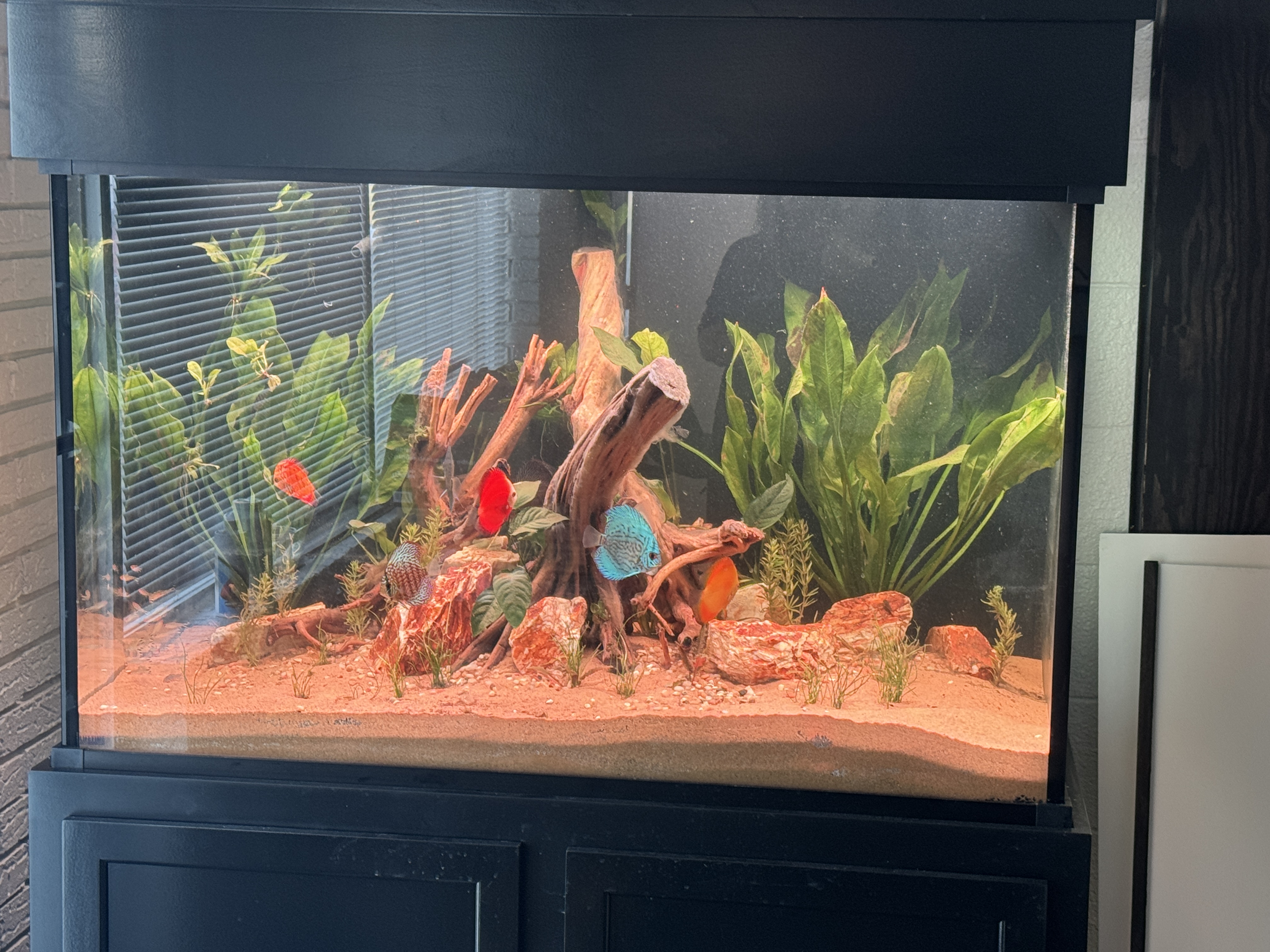
This wood is a good choice for hobbyists who want structure without heavy tea-colored water. It usually releases fewer tannins than darker woods, although every piece varies.
Ghost wood is often more dense than spider wood, so many pieces sink more easily. It also looks excellent in tanks where you want the wood to show rather than blend into the background.
Use ghost wood when you want a lighter aquascape, strong contrast, and a cleaner visual style.
Malaysian Driftwood
Malaysian driftwood is one of the most dependable aquarium woods.
It is dense. It usually sinks quickly. It has dark color, rough texture, and a natural shape which works in many aquariums. For beginners, this is often one of the easiest pieces to work with because it usually stays put.
The tradeoff is tannins. Malaysian driftwood often releases a lot of tannins early. Your water might turn brown for a while. This is normal. Water changes, time, carbon, or Purigen will reduce the color.
Malaysian driftwood works well in pleco tanks, planted community tanks, South American cichlid tanks, and aquariums where you want a darker, more natural look.
If you want wood with fewer surprises, Malaysian driftwood is a strong choice.
Mopani Wood
Mopani is heavy, dense, and long-lasting.
It has a two-tone look, often with a lighter side and a darker side. This gives it strong visual character. It is also one of the easier woods to keep in place because it usually sinks without much effort.
Mopani releases tannins steadily. Some pieces release tannins for a long time, even after soaking. This does not mean the wood is unsafe. It means patience helps.
Because Mopani is dense, it breaks down slowly. It is a good fit for aquariums with larger fish, cichlids, plecos, or fish known for moving decor.
If you want a piece of wood with weight, durability, and a bold look, Mopani is worth considering.
Cholla Wood
Cholla wood is different. It is not hardwood from a tree. It is the dried skeleton of a cholla cactus.
Its structure is what makes it special. It is hollow, full of openings, and perfect for shrimp. Shrimp move through it, hide inside it, and graze across every surface. In a shrimp tank, cholla wood is both decor and habitat.
Cholla releases very little tannin compared with darker aquarium woods. It is also lightweight and breaks down faster. This is expected. Over time, it will soften and slowly decompose.
This is a great option for shrimp tanks, nano tanks, small community tanks, and fry grow-out setups where tiny animals need cover.
Mangrove Wood
Mangrove wood has a twisted, natural root shape. It creates a strong centerpiece and works well in tanks where you want the hardscape to stand out.
Aquarium-safe mangrove wood releases tannins at a moderate rate. It gives fish and invertebrates plenty of surface area to explore and graze.
It is a good option for hobbyists who want a more sculptural piece of wood without choosing something too light or delicate.
Woods to Keep Out of Your Aquarium
This is where we want to be firm.
If the wrong wood goes into an aquarium, the issue is not limited to appearance. Unsafe wood might release oils, resins, sap, pesticides, preservatives, or natural compounds harmful to fish and invertebrates. It might also rot fast and create water quality problems.
When in doubt, leave it out.
Cedar
Cedar is the wood from our opening story.
Our advice is simple: cedar does not belong in your aquarium.
Cedar contains natural oils and compounds which give it its strong smell. Those same qualities make it a poor choice for fish tanks. If you cut into wood and it smells like cedar, take it as your warning sign.
Cedar is also a softwood. It breaks down faster than dense aquarium hardwoods. As it breaks down, it adds organic waste to the tank. This leads to cloudy water, odor, ammonia risk, and extra stress on fish.
We do not recommend trying to make cedar safe. The risk is not worth it.
Pine, Fir, Spruce, and Other Softwoods
Softwoods are poor aquarium choices.
Pine, fir, spruce, and similar woods often contain sap, resin, and aromatic oils. These substances do not belong in fish water. Softwoods also break down much faster under water than dense hardwoods.
A simple rule helps: if it came from a tree with needles, skip it.
This rule is not meant to turn everyone into a tree expert. It is meant to help beginners avoid a bad decision.
Pressure-Treated or Chemically Treated Wood
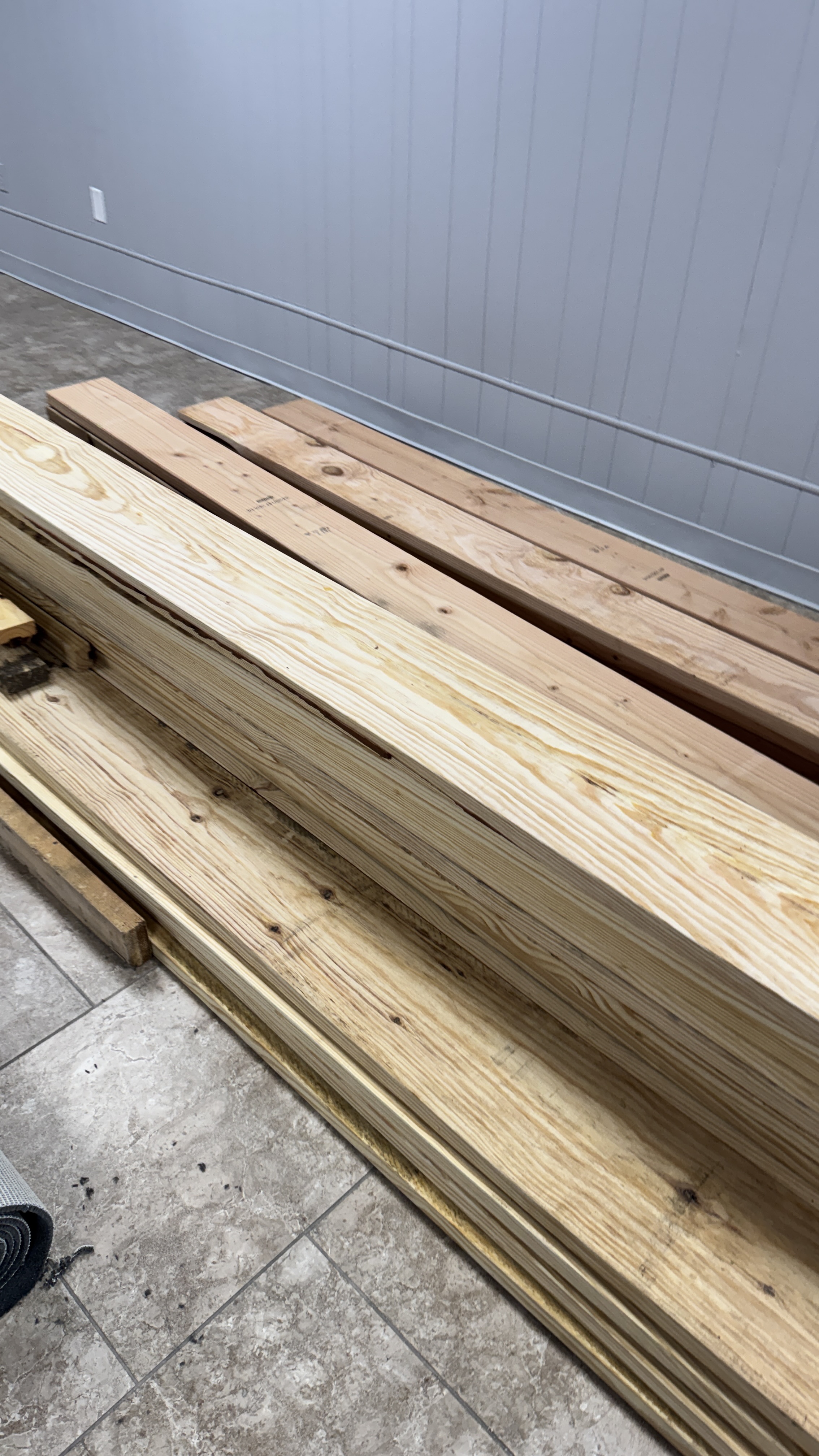
Any treated wood is an immediate no.
Alt text:
This includes pressure-treated lumber, painted wood, stained wood, sealed wood, pallets, landscape timber, fence boards, deck boards, railroad ties, and construction scraps.
Treated wood is made to resist insects, rot, and weather. Those treatments do not belong in an aquarium. Copper, preservatives, sealers, oils, paints, pesticides, and other residues put fish and invertebrates at risk.
Old treated wood is still treated wood. Weathered treated wood is still treated wood. If you are unsure, do not use it.
Black Walnut
Black walnut is another wood we advise against.
Black walnut produces juglone, a natural compound known for toxicity concerns around plants and animals. In a closed aquarium, risk management matters. A piece of black walnut is not worth the gamble.
Choose a safer aquarium wood instead.
Unknown Wood
Unknown wood is risky wood.
If you do not know the species, where it came from, or what it was exposed to, it should not go into your aquarium.
We understand the temptation. Found wood is free, and some pieces look amazing. But fish live in a closed system. Anything placed in the tank affects the water around them.
Free wood stops being free if it costs you livestock.
Should You Use Wood Found Outside?
The honest answer is: found wood sometimes works, but it puts more responsibility on the hobbyist.
We are not saying every piece of outdoor wood is unsafe. Experienced aquarists have used collected hardwood successfully. The issue is proof. You need to know what the wood is, where it came from, how long it has been dead, and what it has been exposed to.
Most beginners do not have enough information to answer those questions with confidence.
The First Question: What Tree Did It Come From?
Species matters.
A dry branch lying near a creek might look harmless. But without knowing the tree, you do not know the risk. The cedar stump from our story looked useful until it was cut. The smell revealed the problem.
Hardwood does not automatically mean safe, and softwood does not always look obvious once weathered. If you cannot identify the wood, skip it.
The Second Question: Where Was It Found?
Location matters too.
Wood near roads might pick up fuel, oil, salt, or other runoff. Wood near farms or lawns might have been exposed to pesticides, herbicides, or fertilizer. Wood from drainage areas might carry unknown contaminants after storms.
This is especially important with waterways. A creek or pond might look clean but still carry runoff from areas upstream.
If you do not know the history of the area, you do not know the history of the wood.
The Third Question: Is It Solid?
Good aquarium wood should feel firm.
If it is soft, spongy, crumbly, punky, or smells rotten, leave it out. Rotting wood adds organic waste quickly. In an aquarium, extra waste means more work for the filter and more risk for the fish.
A little weathering is different from rot. Weathered hardwood often has a dry, firm feel. Rotten wood breaks apart, flakes, smells bad, or feels soft under pressure.
Our Practical Advice on Found Wood
If you are new to the hobby, buy aquarium-prepared wood.
It saves time. It reduces risk. It gives you a piece chosen for aquarium use from the start.
If you still want to use found wood, bring pictures to the store before using it. Show us the piece, where it came from, and any bark, grain, or cut surfaces. We will help you think through the risk.
We would rather help you say no to a risky piece than help you clean up a problem later.
How to Prepare Store-Bought Aquarium Wood
Aquarium-prepared wood is safer, but it still benefits from prep.
The goal is to remove loose debris, reduce early tannin release, and help floating pieces sink before they go into the display tank.
Step 1: Rinse and Scrub
Rinse the wood under clean water.
Use a brush to remove dust, dirt, or loose fibers. Do not use soap, bleach, vinegar, household cleaners, or sprays.
Anything used on the wood might end up in the aquarium.
Step 2: Soak in a Separate Container
Place the wood in a bucket, tote, or bin with dechlorinated water.
Change the water every day or two. The water might turn yellow, brown, or tea-colored. This is normal tannin release.
Soaking also reveals how the piece behaves. Does it float? Does it release heavy color? Does it have any strange odor? It is better to learn those things in a bucket than in your display aquarium.
A few days is enough for some pieces. Other pieces take one to two weeks or longer.
Step 3: Boil Small Pieces When Practical
If the piece fits safely in a pot, boiling helps.
Boiling speeds up tannin release and helps water move into the wood. It also helps loosen debris from cracks and pores. One to two hours is plenty for most small pieces.
Large pieces often do not fit in a pot, and this is fine. Soaking is the more practical option.
Step 4: Weigh Down Floating Wood
Floating wood is common, especially with spider wood.
Use a rock, slate, or aquarium-safe weight to hold it down. Fishing line or cotton thread works well for temporary placement. Over time, the wood takes on water and sinks on its own.
Be patient. Some pieces sink quickly. Some take longer.
How to Prepare Found Wood
Found wood needs more careful preparation because there are more unknowns.
These steps reduce risk, but they do not turn unknown wood into guaranteed-safe wood.
Step 1: Identify the Wood
Do not skip this step.
Avoid cedar, pine, fir, spruce, black walnut, treated wood, painted wood, stained wood, and any unknown wood.
If you cannot identify it, do not use it.
Step 2: Remove the Bark
Bark traps dirt, insects, fungus, eggs, and decaying material.
Remove as much bark as possible. If bark will not come off or the wood underneath looks soft, the piece is not a good candidate.
Step 3: Cut Away Bad Areas
Cut away anything soft, rotten, punky, or spongy.
Check the ends, cracks, and any hollow areas. A solid piece is worth considering. A rotten piece belongs outside.
Step 4: Scrub Thoroughly
Scrub the wood with clean water and a stiff brush.
Do not use soap or chemicals. The goal is physical cleaning, not chemical treatment.
Step 5: Boil Smaller Pieces
For found wood small enough to fit safely in a pot, boiling is strongly recommended.
Boil for 1 to 2 hours. This helps remove debris, reduce some tannins, and lower the risk of unwanted hitchhikers.
Boiling does not fix unsafe wood species or chemical exposure. It is a prep step, not a magic eraser.
Step 6: Soak and Watch
Soak the wood in dechlorinated water for 1 to 2 weeks.
Change the water often. Watch for warning signs:
Strong odor
Oily film
Strange colors other than normal brown tannins
Wood turning soft
Slime with a foul smell
If you notice any of those signs, do not use the piece.
Step 7: Test Before Trusting It
After soaking, place the wood in a temporary container with dechlorinated water and test the water over a few days.
Check pH, ammonia, and odor. Watch for unusual film on the surface. This is not perfect, but it gives you more information before the wood enters your main aquarium.
If anything seems off, leave it out.
What to Expect After Driftwood Goes Into the Aquarium
Even prepared wood often changes the tank during the first few weeks.
Most of these changes are normal. The key is knowing the difference between normal and concerning.
Tea-Colored Water
Brown or tea-colored water usually means tannins.
This is normal with many aquarium woods. Malaysian driftwood and Mopani often release more color than ghost wood or cholla.
If you like the look, keep up with normal water changes and enjoy it. If you prefer clearer water, use activated carbon or Seachem Purigen in the filter.
Do not panic based on color alone. Test the water if fish act stressed.
White or Gray Film
White or gray film on new wood is usually biofilm.
It often appears in the first two to four weeks. Shrimp, Otocinclus, plecos, and some other fish often graze on it. It usually fades as the aquarium settles.
If it bothers you, brush it off gently during a water change or siphon it away.
Biofilm with no bad smell is usually normal. Slimy rot with a bad smell is not.
Floating Wood
Some wood floats at first. This is common with spider wood and other lighter pieces.
Hold it down with a rock or aquarium-safe weight. After enough time submerged, it often stays down on its own.
Avoid gluing random household materials to wood. Stick with aquarium-safe options.
Small pH Movement
Driftwood might shift pH in some aquariums, but the result depends heavily on KH.
Low-KH water moves more easily. High-KH water resists change. This is why one hobbyist might see a pH drop while another sees no change at all.
If you keep fish sensitive to pH or hardness, test before and after adding large amounts of wood.
Extra Organic Load
New wood adds organic material to the tank.
Usually, a healthy aquarium handles this without trouble. But in a new tank, an overstocked tank, or an aquarium with weak filtration, extra organics might contribute to cloudy water or parameter swings.
Keep an eye on ammonia and nitrite if the tank is new or fish act off.
Which Fish Benefit Most From Driftwood?
Many freshwater fish benefit from driftwood, but some groups especially appreciate it.
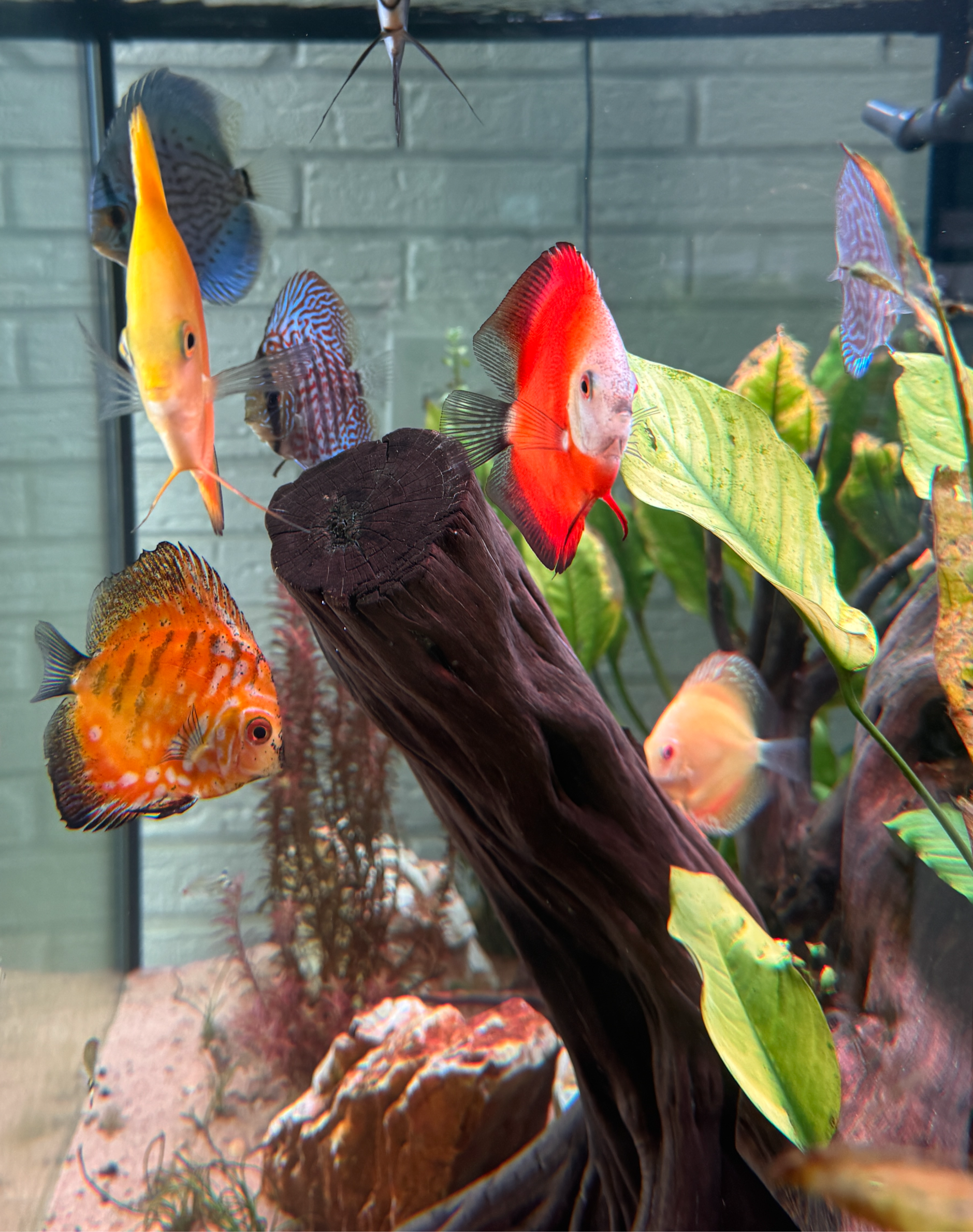
Plecos
Plecos are one of the first fish we think about with wood.
Many plecos spend much of the day grazing across surfaces. Wood gives them cover, territory, and a natural surface to rasp. Bristlenose plecos, clown plecos, and many other types appreciate wood in the tank.
Wood also helps create caves and shaded areas, which makes plecos feel more secure.
Shrimp
Shrimp love surface area.
The more surfaces they have, the more places biofilm grows. Cholla wood is especially useful because shrimp move through the openings and graze inside and outside the piece.
For shrimp tanks, wood is not decoration only. It is part of the feeding surface and shelter system.
Bettas
Bettas often do better in tanks with cover and resting spots.
Wood helps break up open areas and gives the fish places to explore. Pair wood with live plants and gentle flow, and the tank feels much more comfortable.
Choose smooth pieces or sand sharp edges. Long fins tear more easily on rough points.
Tetras and Rasboras
Small schooling fish often show better color and confidence in planted tanks with wood.
The structure gives them places to move around and retreat behind. It also makes open swimming space feel less exposed.
Cardinal tetras, rummynose tetras, ember tetras, harlequin rasboras, and similar fish all look excellent in wood-and-plant layouts.
South American Cichlids
Rams, Apistogramma, angels, discus, and similar fish often fit well with driftwood.
Wood gives these fish boundaries, cover, and a more natural layout. For dwarf cichlids, it also helps create territories without the entire tank becoming one open contest.
Livebearers and African Cichlids
For hard-water fish, use wood with more intention.
Guppies, mollies, platies, swordtails, and African cichlids often prefer harder, more alkaline water. A small piece of wood for structure is often fine, but a tank packed with tannin-heavy wood might not match the water goals for those fish.
For African cichlids, rockwork is usually the better main structure.
Common Driftwood Questions
Is brown water bad?
Usually, no.
Brown water from tannins is common with new driftwood. It is not the same as dirty water. If your ammonia and nitrite are zero and the fish are acting normal, tannins are usually a visual choice rather than an emergency.
How do I clear tannins faster?
Pre-soak the wood before adding it. Change water during soaking. After the wood is in the tank, use regular water changes, activated carbon, or Purigen.
Some wood releases tannins for weeks or months. Patience helps.
Is white fuzz on wood dangerous?
Usually, no.
White fuzz on new driftwood is often biofilm. Shrimp, plecos, and Otocinclus often eat it. If it has no foul smell and fish act normal, it is usually part of the break-in process.
Does all driftwood sink?
No.
Malaysian driftwood and Mopani often sink faster. Spider wood often floats at first. Ghost wood varies by piece. Cholla is light and often needs time.
Will driftwood lower my pH?
It might, especially in low-KH water.
In hard water, the change might be small. Test instead of guessing.
Will driftwood soften my water?
Not reliably.
Driftwood does not remove dissolved minerals from tap water. If you need softer water, ask us about RO water, remineralizing, and keeping parameters stable.
Is driftwood safe for planted tanks?
Yes, when it is aquarium-safe wood.
Many plants attach well to wood. Anubias, Java fern, Bucephalandra, and mosses are great examples. Wood also helps create a more natural planted layout.
How much wood is too much?
It depends on tank size, filtration, fish, and water goals.
A single centerpiece in a 20-gallon aquarium is very different from packing the whole tank with tannin-heavy wood. Start with a reasonable amount, test your water, and watch how the fish respond.
Our Honest Take at Fins For Grins
Driftwood is one of our favorite tools for building better freshwater aquariums.
It gives fish places to feel safe. It gives shrimp and plecos something to graze. It makes planted tanks look more natural. It turns empty space into usable space.
But the right piece matters.
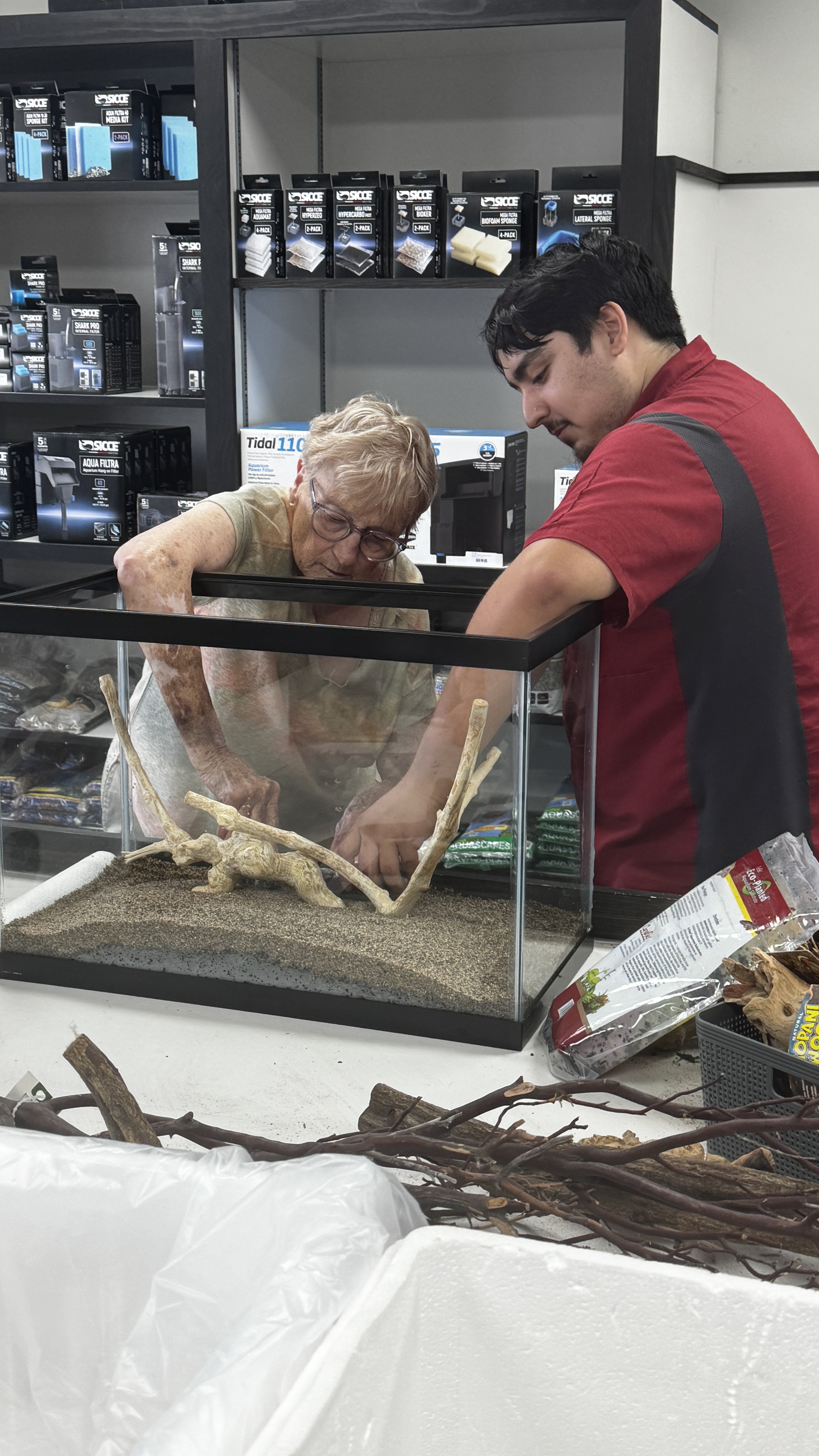
The cedar stump from our story looked like it had potential. It had size and character. But once it was identified, the choice was easy. It stayed out of the aquarium.
Those are the decisions we want to help customers make before there is a problem.
If you are ready to add driftwood to your aquarium, stop by Fins For Grins. We carry aquarium-prepared wood, including spider wood, ghost wood, Malaysian driftwood, Mopani, cholla, and mangrove wood.
Bring us your tank size, fish list, and a photo of your aquarium. We will help you choose a piece suited to your layout, your fish, and your water goals.
If you found wood outside and you are unsure about it, bring pictures before using it. We would rather help you say no to a risky piece than help you fix a tank after the wrong wood goes in.
Visit Fins For Grins
Fins For Grins1312 N. Elm PlBroken Arrow, OK
Website: www.finsforgrins.com
Facebook: facebook.com/FinsforGrins TikTok:@finsforgrins2
Happy Fishkeeping,
Ray & Michelle