
You did everything right. You set up the tank. You let the water run for a day or two. You picked out fish you actually liked. You even bought the fancy food. And then, a week later, you're standing at the tank watching your fish gasp at the surface — or worse, float sideways.
This is the most common story we hear at Fins For Grins. And almost every time, the answer is the same: the tank wasn't cycled.
Here's the truth that most fish stores either forget to tell you or explain so scientifically that your eyes glaze over: a brand-new aquarium is basically a toxic wasteland. It looks pretty. The water is clear. But it is not ready for fish — not yet. Something called the aquarium nitrogen cycle has to happen first, and understanding it is the single most important thing you can learn as a fishkeeper.
Don't worry. We're going to explain the whole thing like you're a normal human being, not a marine biologist.
Understanding the Nitrogen Cycle: A Key to Successful Fishkeeping
Think of your aquarium like a tiny city. Your fish are the residents. They eat, they breathe, and they produce waste — and that waste has to go somewhere. In a real city, you've got sewage systems and sanitation workers. In your tank, that job falls to invisible workers: beneficial bacteria.
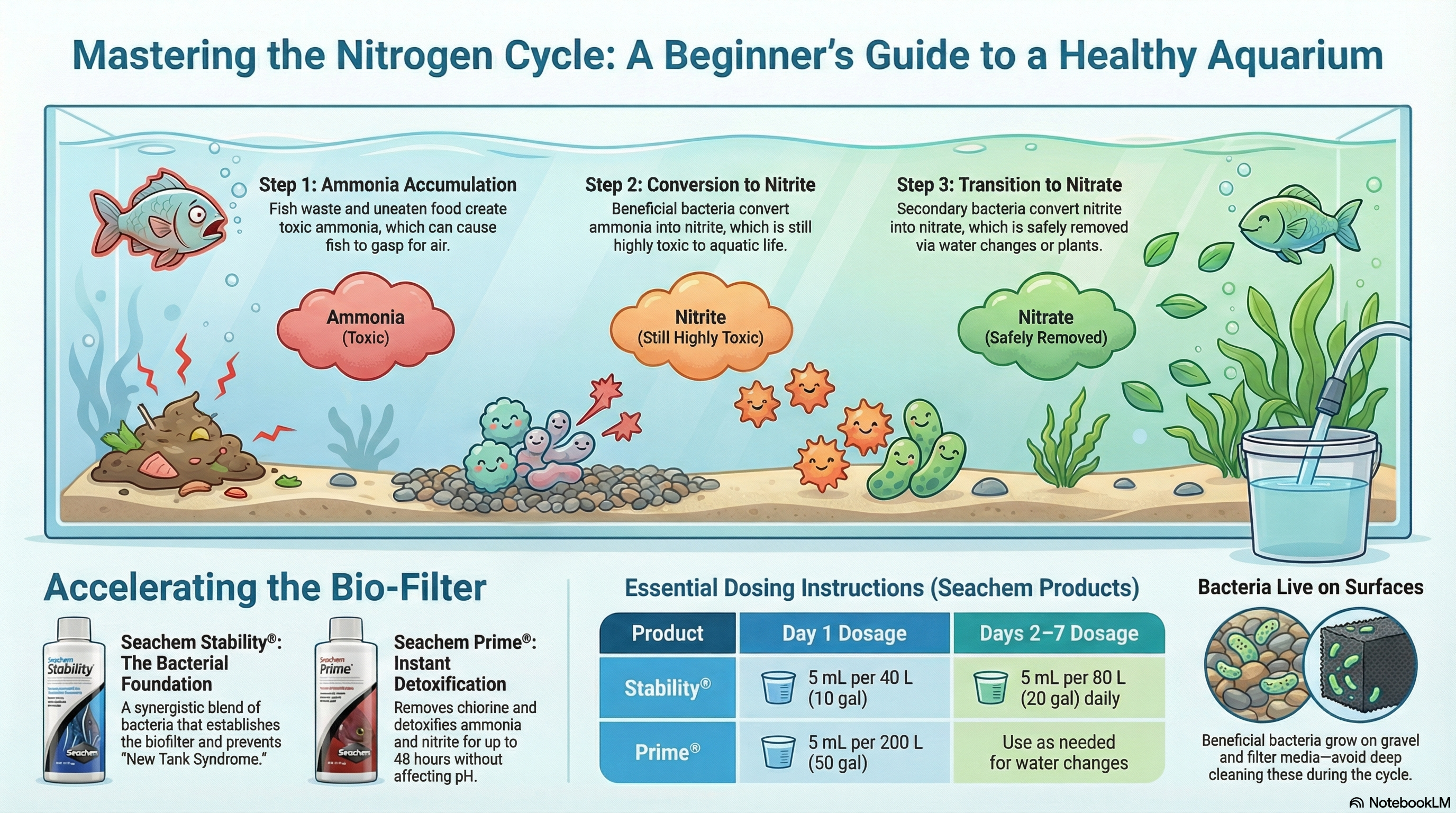
The nitrogen cycle is simply the process of building up that bacteria colony in your filter and gravel so the tank can clean itself. Until that colony exists and is strong enough to do its job, harmful chemicals pile up fast. Fish are remarkably tough animals in the wild, but in a glass box with no bacterial backup? They don't stand a chance against their own waste.
The whole process typically takes 4 to 8 weeks in a brand-new tank. That feels like forever when you're excited to get fish. We get it. But sticking it out saves fish lives — and saves you money.
The Three Stages of the Aquarium Nitrogen Cycle
Every aquarium goes through the same three stages. Here's what's actually happening in the water:
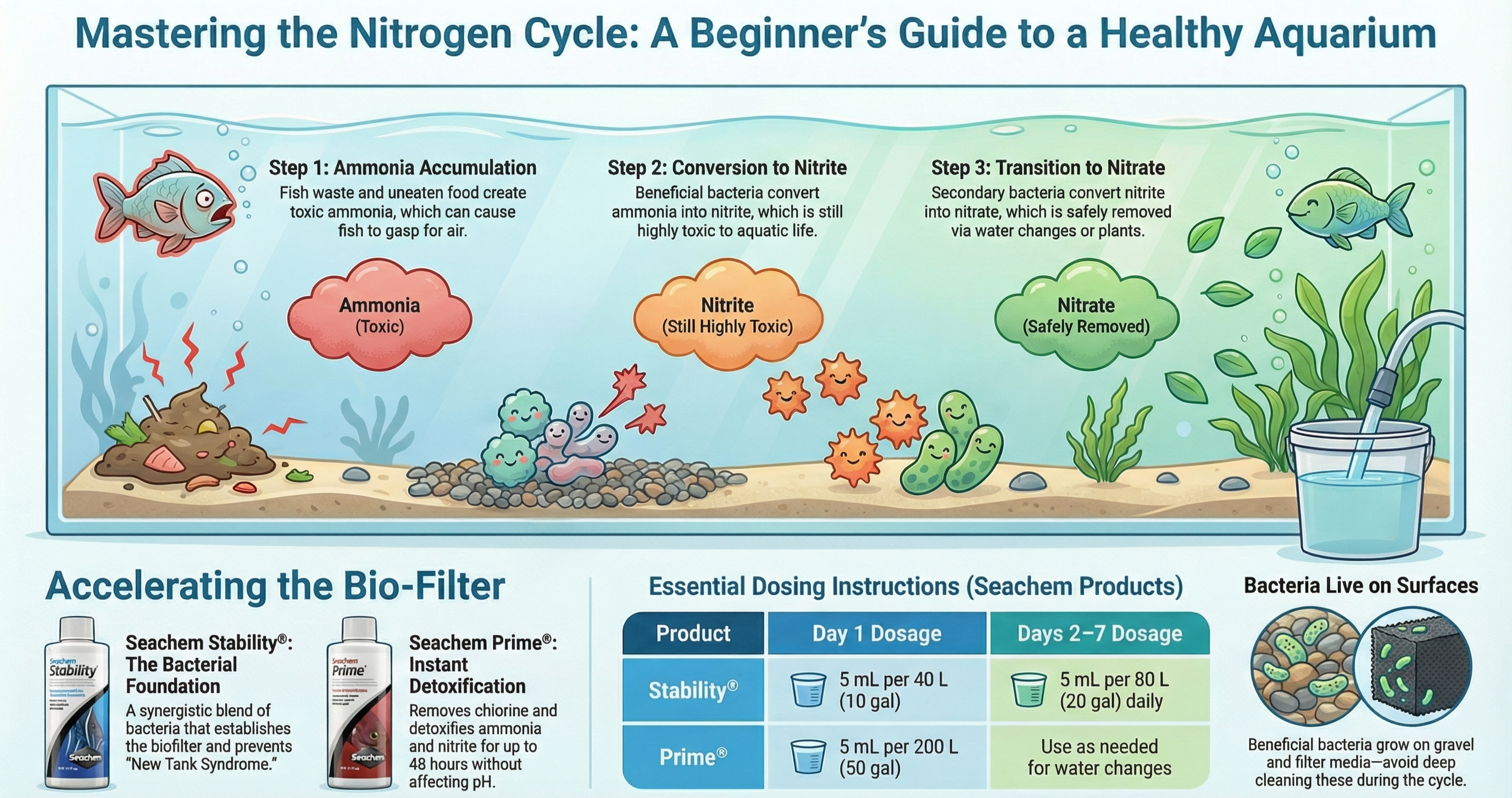
Stage 1 — Ammonia Builds Up
Fish waste, uneaten food, and decaying plants all break down into ammonia. Ammonia is so toxic it can burn a fish's gills from the inside. Even tiny amounts are dangerous.
Stage 2 — Ammonia Becomes Nitrite
A group of beneficial bacteria shows up and starts converting ammonia into nitrite. Good news: ammonia drops. Bad news: nitrite is also toxic. Still not time to breathe a sigh of relief.
Stage 3 — Nitrite Becomes Nitrate
A second group of bacteria converts nitrite into nitrate, which is mostly harmless at low levels. Regular water changes and live plants keep nitrate from building up. At this point, you're cycled.
Here's a way to picture it: imagine your filter is a tiny farm, and bacteria are the crops. You have to grow those bacteria before the farm can do any real work. Stages 1 and 2 are the growing season. Stage 3 is harvest time. You can't rush a farm, and you can't really rush a cycle.
Important: Ammonia and nitrite are both deadly to fish. If your test kit reads anything above 0 ppm for either one, your tank is not safe. This is not a "wait and see" situation — fish in uncycled water experience chemical burns on their gills and internal organs.
What Is "New Tank Syndrome"?
You may have heard this phrase thrown around. New Tank Syndrome is just a nickname for what happens when someone adds fish to an uncycled tank and those fish get hammered by ammonia and nitrite spikes. The fish look fine at first — sometimes for a few days — and then they crash. Fast.
The cruel thing about New Tank Syndrome is that the water looks perfect. Crystal clear. No algae. No gunk. But looks are lying to you. Clear water does not mean safe water. Only a water test will tell you the truth.
How Do You Know When You're Cycled?
Simple: test your water. You need a liquid test kit — not the paper strips, which are notoriously inaccurate. The API Freshwater Master Test Kit is the gold standard and costs less than a nice dinner out. It tests ammonia, nitrite, nitrate, and pH all in one box.
Your tank is fully cycled when:
Ammonia reads 0 ppm
Nitrite reads 0 ppm
Nitrate reads anything above 0 (usually 5–20 ppm is great)
Those readings stay stable for at least 48 hours
When you hit all four of those marks, congratulations — you have a cycled tank. It's genuinely one of the best feelings in this hobby, and we mean that.
Can You Speed the Cycle Up?
Yes — and this is where it gets exciting. You don't have to sit around for eight weeks twiddling your thumbs. There are a few tried-and-true shortcuts:
Use a Bacterial Supplement
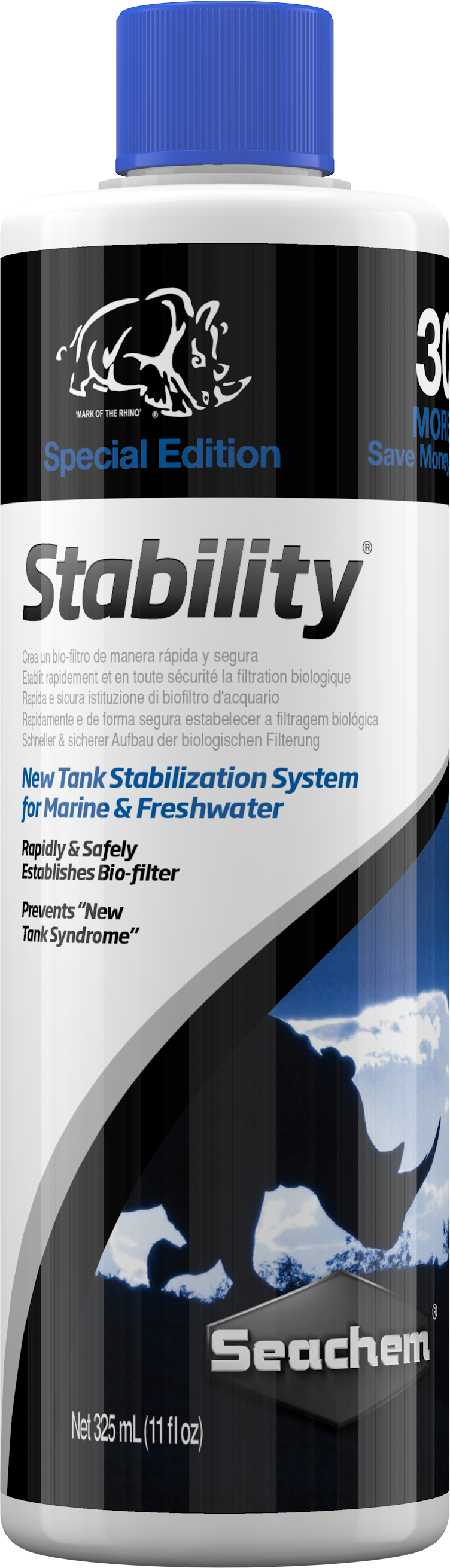
Seachem Stability is our go-to recommendation here. It's a bottle full of the exact bacteria you need, and you dose it directly into the tank. Instead of waiting for bacteria to naturally colonize your filter, you're giving the process a head start. Used correctly alongside Seachem Prime, it can cut weeks off your cycling time.
Seachem Stability: Day 1 — 5 mL per 10 gallons. Days 2 through 7 — 5 mL per 20 gallons daily.
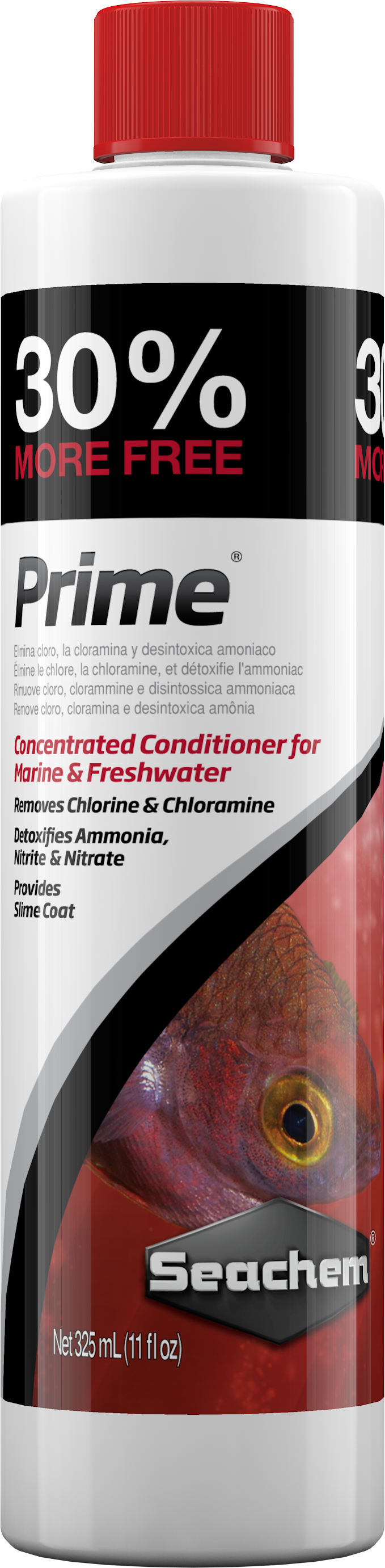
Seachem Prime: *5 mL per 50 gallons. Detoxifies ammonia and nitrite for up to 48 hours.
Think of Prime as a temporary shield. It detoxifies ammonia and nitrite without removing them — so the bacteria can still eat them, but your fish aren't getting hurt in the meantime. It's not a permanent fix, but it buys you time while the cycle finishes.
Steal Some Bacteria From an Established Tank
This is the oldest trick in the fishkeeping book, and it still works beautifully. If you have a friend with a healthy, established aquarium, ask them for a small piece of their filter media or a cup of their gravel. That material is loaded with beneficial bacteria, and dropping it into your new tank gives the cycle a massive jump start. At the shop, we sometimes do this for customers when we can — it's one of those things we genuinely enjoy being able to do.
Be Smart About How Many Fish You Start With
If you want to add fish while the cycle is still in progress — a process called "fish-in cycling" — start with just a couple of the hardiest fish you can find. Zebra Danios and White Cloud Mountain Minnows are classic choices. They can handle mild water parameter swings better than most. The key is keeping the ammonia source small while the bacteria catch up.
Important: If you cycle with fish in the tank, you must test the water every single day and do partial water changes (about 25–50%) any time ammonia or nitrite climbs above 0.25 ppm. Every. Single. Day. No exceptions. This is the commitment that comes with fish-in cycling.
Mistakes That Reset (or Wreck) Your Cycle
Here's where a lot of fishkeepers — even experienced ones — accidentally shoot themselves in the foot. The bacteria you're growing are living things. They can be killed just like any living thing.
Deep-cleaning your filter — Rinsing your filter media under tap water kills your entire bacteria colony. If you need to clean it, rinse it gently in a bucket of old tank water only.
Using tap water without dechlorinator — Chlorine and chloramine in tap water are specifically designed to kill bacteria. They don't know the difference between bad bacteria and your good bacteria. Always use a dechlorinator like Prime.
Adding way too many fish at once — Even a fully cycled tank can only handle so much. Adding a dozen new fish all at once dumps more ammonia into the system than your bacteria can handle. Add fish gradually over weeks.
Replacing everything after a problem — When something goes wrong, the instinct is to dump everything and start over. Resist that urge. A full tank reset means starting the cycle from scratch.
Treating the tank with antibiotics — Antibiotics will kill bacteria — all bacteria. If you treat a cycled tank with antibiotics, monitor your water closely and re-dose with Stability when treatment is done.
Where Do the Bacteria Actually Live?
This surprises a lot of people: the beneficial bacteria in your tank don't really float around in the water. They live on surfaces — your filter media, your gravel, your decorations, the walls of the tank. That's why a powerful filter with lots of surface area (think sponge filters or ceramic rings) is so much better at housing bacteria than a tiny cartridge filter.
It's also why the gravel trick works so well. When you take gravel from an established tank, you're taking a thriving bacteria colony with it. And it's why we tell people: don't go overboard scrubbing decorations during a water change. A little algae and biofilm on your driftwood and rocks is not a bad thing — that's bacteria doing its job.
Pro Tip from the Shop: One of the single best investments you can make is adding a sponge filter to any tank. They're cheap, nearly indestructible, and they provide so much surface area for bacteria that your cycle becomes incredibly stable. We run them in almost every tank at the store.
Common Questions We Hear Every Week
My water is crystal clear. Does that mean it's safe?
Nope. Ammonia and nitrite are completely colorless and odorless. Clear water tells you nothing about water chemistry. Only a test kit will give you the real story.
My fish seem fine. Does that mean the cycle is done?
Not necessarily. Fish can appear healthy for days while ammonia and nitrite are building to toxic levels. By the time a fish shows obvious symptoms — clamped fins, gasping, lethargy — the damage is often already done. Test the water, not the fish.
How long does the cycle take?
Without any help, a fishless cycle typically takes 4 to 8 weeks. With Seachem Stability dosed daily, many people see it complete in 7 to 14 days. Results vary based on temperature, pH, and how much ammonia is in the tank.
My cycle crashed and ammonia is spiking in my established tank. What happened?
A few things can crash a cycle: deep-cleaning the filter, a large water change with untreated tap water, a big batch of new fish, or a disease treatment with antibiotics. Dose Stability daily for a week, do small water changes to keep ammonia in check, and the bacteria colony will usually recover.
Can live plants help with the cycle?
Yes — live plants absorb ammonia and nitrate directly, which helps keep levels in check during the cycling period. Fast-growing plants like hornwort, water sprite, and Amazon frogbit are especially good at this. It's one of many reasons we love planted tanks.
Do I still need to do water changes once my tank is cycled?
Absolutely. The cycle converts ammonia and nitrite to nitrate, but nitrate still builds up over time. Regular water changes — usually 20 to 30 percent weekly — are how you keep nitrate from climbing to stressful levels. The cycle maintains the tank. Water changes maintain the cycle.
The Payoff Is Worth It
We know this article was a lot. And we know that when you're standing in our shop, holding a bag of fish you absolutely love, the last thing you want to hear is "you need to wait a few more weeks." We've had that conversation hundreds of times.
But here's what we also see all the time: customers who understand the cycle, who do it right, who wait it out — they're the ones who come back six months later with a tank full of healthy, thriving fish they're genuinely proud of. That's the payoff. A tank that doesn't crash. Fish that don't die for mysterious reasons. And the confidence to keep going and take on bigger challenges.
The nitrogen cycle isn't a hurdle. It's the foundation of everything. Get the foundation right, and the rest of this hobby opens up in the best possible way.
If you are setting up your first tank and working through the nitrogen cycle, come in and talk to us. We test water for free and can help you get through the cycle faster with the right products.
See This Week's Fish: finsforgrins.com/newfishday
Visit Us: 1312 N. Elm Pl., Broken Arrow | Mon–Fri 10am–7pm, Sat–Sun 10am–6pm