
Ask ten fishkeepers how often to do water changes, and you will get eleven different answers. Weekly. Twice a week. Once a month. When it looks bad. Never — I have plants.
Here is the honest truth: there is no single magic schedule. But there is a right way to think about it, and once you understand the logic behind water changes, the schedule basically figures itself out. Let us walk you through it.
Why Water Changes Matter in the First Place
Your fish live, eat, breathe, and — let's be direct — go to the bathroom in the same water. No matter how good your filter is, waste products build up over time. The big three you need to know about are ammonia, nitrite, and nitrate.
Ammonia and nitrite are the dangerous ones — they can harm or kill fish quickly. A healthy, cycled tank converts them into nitrate through the nitrogen cycle. Nitrate is far less toxic, but it still accumulates, and over time, high nitrate levels stress your fish, suppress their immune systems, and fuel algae blooms.
Water changes remove nitrate (and other dissolved organics) and replace the water with something clean. That is really what a water change is — not a reset, not a deep clean, just a controlled removal of the stuff that builds up between maintenance days.
How Often to Do Water Changes in Your Aquarium
Here is where most beginner guides give you a single number and call it a day. We would rather give you a framework.
For Most Beginner Community Tanks: Weekly, 25–30%
If you have a moderately stocked freshwater tank — think tetras, rasboras, corydoras, a betta, or a mix — a 25 to 30 percent water change once per week is a solid starting point. It keeps nitrates in check without causing the kind of sudden parameter swings that stress fish out.
For Heavily Stocked or Messy Tanks: More Often, More Volume
Goldfish, livebearers in big numbers, or any tank where fish are packed in closer than they should be will produce more waste faster. Those tanks often benefit from 35 to 50 percent changes weekly, or smaller changes two to three times per week.
For Lightly Stocked or Planted Tanks: Less Often, Less Volume
A well-planted tank with only a handful of fish may get by fine with 15 to 25 percent every one to two weeks. Live plants consume nitrate as part of their growth, which reduces how fast levels climb. That said, planted tanks are not maintenance-free — they still need water changes.
The Real Rule: Test Your Water
The most accurate way to know if your schedule is working is to test your nitrates. Keep them below 20 to 40 ppm. If nitrates are climbing past that range before your next scheduled change, you need to change more water, change it more often, or both. If they are barely moving, you may be able to stretch your schedule.
A quality liquid test kit is one of the best investments you can make as a beginner. API Master Test Kit is a popular choice, and we carry it in store.
How to Do a Water Change the Right Way
Knowing the schedule is half the battle. The other half is doing it correctly, because a badly executed water change can cause more problems than it solves.
What You Will Need
A gravel vacuum or siphon
Two buckets marked "Aquarium Only" — never use them for anything else
A water conditioner like Seachem Prime
A thermometer (or a good sense of what your tap water feels like)
Step-by-Step
1. Do not clean everything at once. Your filter media is home to the beneficial bacteria that keep your nitrogen cycle running. Never rinse filter media in tap water, and do not do a water change the same day you do a major filter cleaning. Space those tasks out.
2. Turn off your heater. A glass heater exposed to air while it is warm can crack. Turn it off before you pull any water.
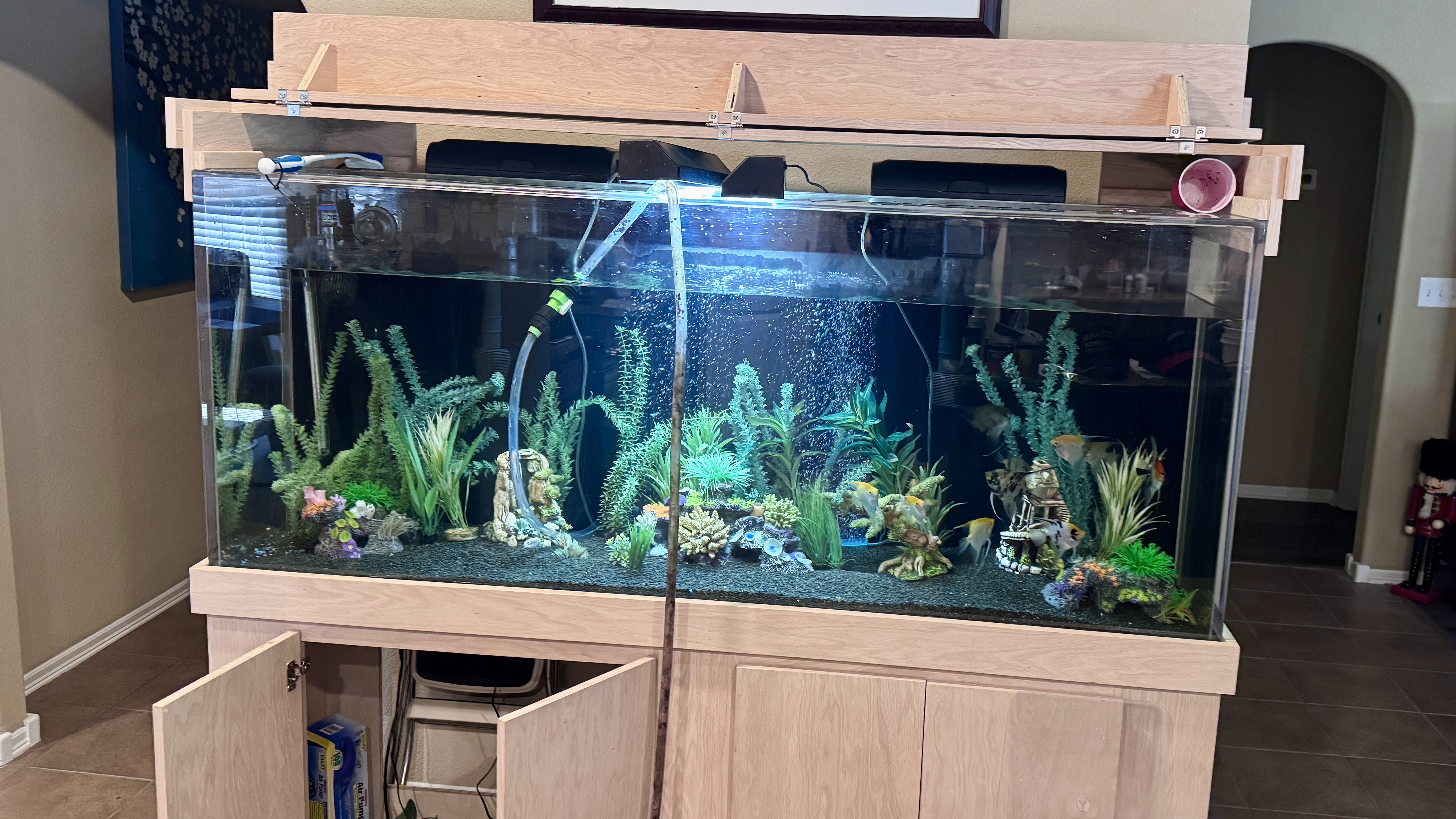
3. Siphon from the substrate, not just the surface. Use a gravel vacuum to pull water up from the bottom of the tank where waste settles. This is where the dirty work lives. Skim across the gravel — you do not need to bury the tube, just hover close enough to pull debris up through the siphon.
4. Match the temperature of your replacement water. Cold water shocking warm fish is a real thing. Run your tap until the temperature feels close to your tank water, or check it with a thermometer. A few degrees off is fine. A significant difference is not.
5. Add your dechlorinator directly to the tank before any new water goes in. Do not add it to the bucket — add it to the tank itself, dosed for the full volume of your aquarium. This removes the single most common cause of accidental fish death during water changes: forgetting to treat the water at all. If Prime is already in the tank when the new water hits, there is no gap where chlorine or chloramine can do damage. Prime neutralizes both, and it is lethal to fish and to the beneficial bacteria in your filter if left untreated — so make this step a non-negotiable part of your routine.
6. Add the water slowly. Pour gently along the glass or against a decoration so you are not blasting your substrate or startling your fish. No need to make it dramatic.
7. Turn your heater back on. Easy to forget, easy to regret.
Common Water Change Mistakes (and How to Avoid Them)
Doing too much at once. Large water changes — 60, 70, 80 percent — sound thorough, but they can swing temperature and chemistry fast enough to stress or shock fish. Consistent smaller changes beat occasional giant ones.
Skipping weeks and then doing a massive change. Letting the tank go and then trying to correct it with a large water change often does more harm than good. A consistent schedule is more fish-friendly than a guilt-driven deep clean once a month.
Mistaking clear water for clean water. This is one of the most common rookie mistakes in the hobby. Crystal clear water can still be loaded with nitrates, ammonia, or dissolved waste. Test your water — your eyes cannot tell you what is in it.
Rinsing the filter media in tap water. Chlorine kills beneficial bacteria. If you rinse your filter sponge under the faucet, you are removing the very organisms that protect your fish. Always rinse filter media in a bucket of tank water that you already removed.
A Quick Note on New Tanks
If your tank is still cycling, the rules change. During the cycling period, ammonia and nitrite can spike to dangerous levels. In that case, you may need to do water changes two or three times per week — not to maintain the cycle, but to keep parameters low enough that fish can survive while the beneficial bacteria are establishing. Test frequently, change often, and be patient.
This is exactly why we recommend doing a fishless cycle. No fish in the tank means no fish at risk while the biology sorts itself out. You control the ammonia source, you let the bacteria establish on their own schedule, and when the cycle is complete, you do one good water change and add fish to a stable, ready environment. It is less stressful for the fish — and honestly, for you too.
We also recommend using Seachem Stability during the cycling process. It introduces beneficial bacteria directly into your tank and helps the cycle establish faster and more reliably. Dose it daily for the first week, then as needed when adding new fish or after any significant maintenance. It is one of the few bottled bacteria products we trust, and we keep it in stock for good reason.
Once the cycle is complete (ammonia and nitrite both read zero, nitrate is detectable), you can settle into a normal maintenance routine.
Products We Recommend for Water Changes
Seachem Prime — Our go-to water conditioner. Detoxifies ammonia and nitrite in a pinch on top of neutralizing chlorine and chloramine. A little goes a long way.
API Master Test Kit — Liquid test kits are more accurate than strips. Test weekly until you know your tank, then as needed.
Python No Spill Clean and Fill — If you are doing water changes with buckets and hating your life, a Python-style water changer that connects to your sink faucet will change everything.
The Bottom Line
How often should you do water changes in your aquarium? For most beginners with a community freshwater tank, once a week at 25 to 30 percent is the right starting point. From there, let your test results guide you. More fish and more feeding means more waste and more frequent changes. Fewer fish, live plants, and good filtration means you may have more flexibility.
The habit matters more than the perfect number. Fish kept in consistently maintained water almost always outlive fish kept in water that gets occasional emergency attention. Build the habit, keep it simple, and your tank will show the difference.
Have questions about your specific setup? Stop in and see us at Fins For Grins in Broken Arrow — we are always happy to help you dial things in.
Happy Fishkeeping, Ray & Michelle