
You didn't get into this hobby to watch fish die. But if you've kept fish long enough, you've probably lived through at least one of those awful weeks — the white spots that appeared out of nowhere, the clamped fins, the fish that seemed fine on Tuesday and was gone by Friday. Maybe it spread. Maybe you lost fish you'd had for years.
Here's the hard truth: most of those losses were preventable. Not because you did something wrong, but because you didn't have one simple tool in place before the problem arrived. That tool is a quarantine tank — also called a hospital tank — and once you understand how it works, you'll wonder how you ever kept fish without one.
This post was inspired in part by a guide prepared by Tina Camacho of AQUAintuition, a freshwater aquarium consultant and one of our favorite people in this hobby. You can learn more about her work at tinacamacho.com.
What Is a Quarantine Tank for Fish, and Why Do You Need One?
A quarantine tank for fish is exactly what it sounds like: a separate, dedicated space where new arrivals can be observed before entering your display tank, or where a sick fish can be isolated and treated without putting every other fish at risk. The two terms — quarantine tank and hospital tank — are often used interchangeably, and for good reason. The same setup serves both purposes.
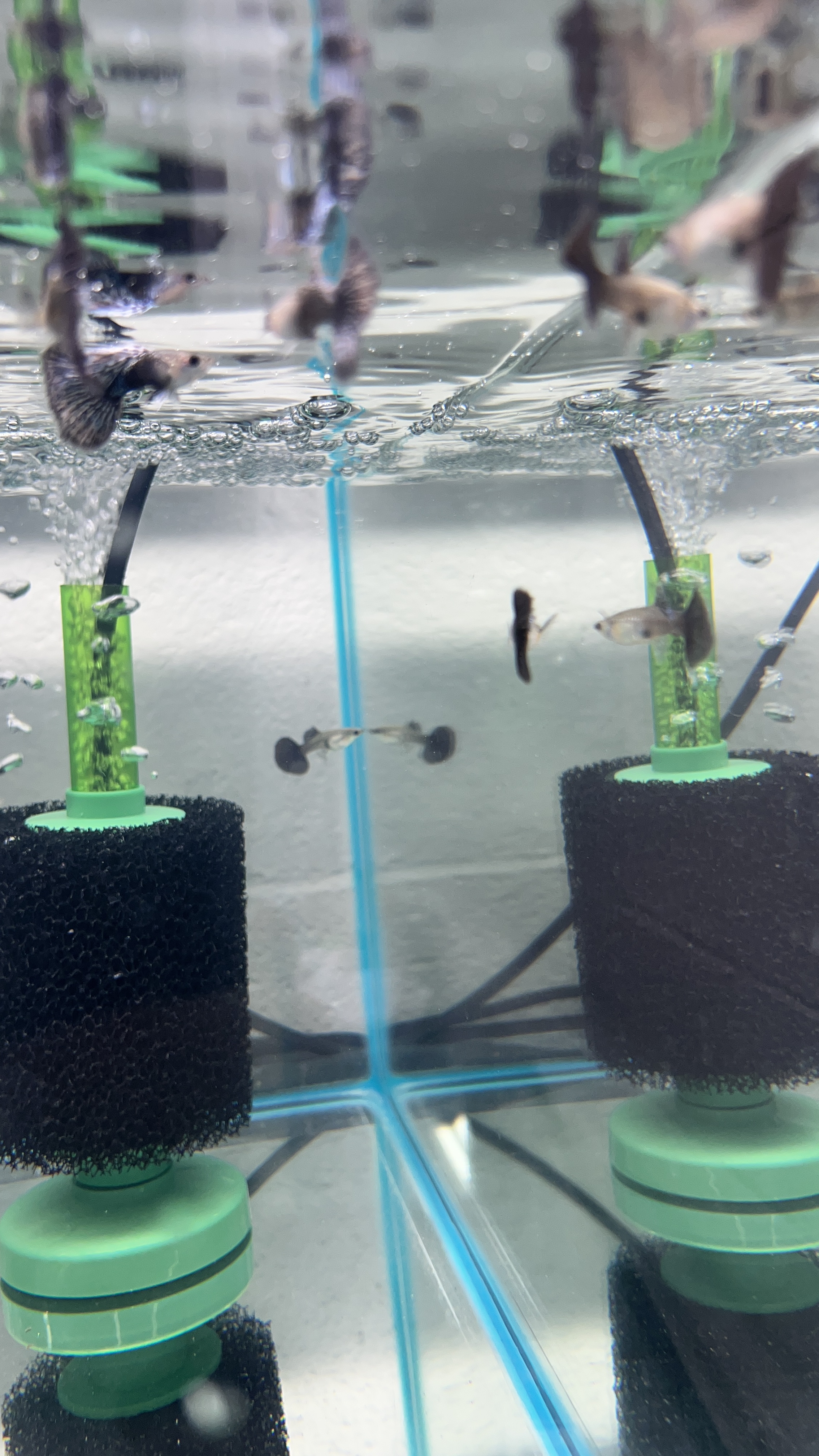
The math here is simple. Your display tank is a community. When one fish carries ich, Columnaris, or internal parasites into that community, every fish is exposed. Treating an entire display tank — especially one with plants, snails, or shrimp — is expensive, stressful for the livestock, and often ineffective. A quarantine tank lets you treat the individual, not the whole neighborhood.
Beyond disease, a hospital tank setup gives you the ability to observe. In a 75-gallon display with rocks and driftwood, you might miss the early signs of illness entirely. In a bare 10-gallon tank, nothing hides — not stringy white feces (a classic sign of internal parasites), not labored breathing, not a wound from a tank mate. Observation is one of the most powerful tools in fishkeeping, and a hospital tank makes it possible.
We'll be honest — we've seen firsthand what happens when this step gets skipped. A customer of ours with a stunning 300-gallon display tank came in regularly and bought fish in quantity. Every single time, we encouraged him to set up a quarantine tank. Every single time, he passed. Then his tank got sick. Treating 300 gallons of water with medication is not a small undertaking — the cost was significant, the process was stressful, and every fish in that tank went through it whether they needed to or not. He now runs two 10-gallon quarantine tanks and hasn't looked back. We're glad it worked out, but we'd rather you learn that lesson here than the hard way.
Setting Up a Quarantine Tank: Simpler Than You Think
This is where most beginners freeze up, because they assume a second tank means a second cycling process, a second expensive setup, and a second piece of furniture in the living room. None of that is true.
A quarantine tank doesn't need to be running 24/7. It's a tool, not a permanent fixture. We recommend a standard 10-gallon as the sweet spot for most freshwater fish. Most medications are dosed for 10 gallons right out of the box, which takes the guesswork out of treatment and keeps costs down. Add a basic sponge filter, a heater, a simple hide (a piece of PVC pipe works perfectly), and a lid. That's it. No substrate. No live plants. No decoration beyond what gives the fish a place to feel secure.
The bare bottom is intentional. It lets you see everything, clean everything, and remove uneaten food before it spikes your ammonia.
The biggest single trick for keeping a quarantine tank ready without cycling it in advance: keep an extra sponge filter running in one of your established tanks at all times. When you need the hospital tank, pull that seeded sponge filter and drop it in. It brings a colony of beneficial bacteria with it, giving you a head start on biological filtration from day one. Pair that with frequent small water changes and very light feeding, and you can manage ammonia without a fully cycled system.
The Quarantine Medication Trio
If you bring home new fish regularly, it's worth knowing about the Quarantine Med Trio — a protocol developed by Aquarium Co-Op, one of the most trusted names in the freshwater hobby and a partner we're proud to carry here at Fins For Grins. The trio consists of three medications used together during a new fish's quarantine period to proactively address the most common threats before they become a crisis.
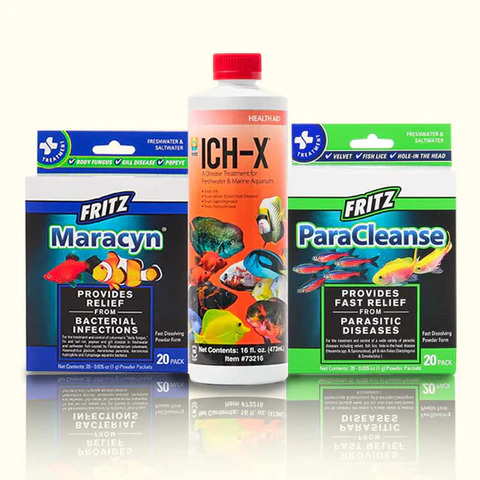
Hikari Ich-X targets ich and external fungal infections. Fritz ParaCleanse treats internal parasites. Fritz Maracyn addresses bacterial infections. We keep all three in stock, along with aquarium salt and other treatments, for exactly that reason.
Not every keeper chooses to use the full trio on every new arrival. Some prefer to observe first and treat only if symptoms appear. Both approaches are valid, and we're happy to talk through which makes sense for your situation. What matters is that you have the tools before you need them.
One important note if you're dealing with internal parasites specifically: many medications like ParaCleanse kill adult worms but cannot penetrate eggs. This means a single treatment isn't always enough. The standard protocol is to dose, wait two weeks for any remaining eggs to hatch, then dose again. Skipping that second treatment is one of the most common reasons a fish seems to recover and then declines again.
A word on aquarium salt: it can be a useful supportive tool in certain situations, but it is not appropriate for all species. Scaleless fish, catfish, loaches, and most live plants do not tolerate salt well. Always research your specific fish before reaching for it, and when in doubt, ask us.
Cross-Contamination: The Rule That Can't Be Broken
Here's where discipline matters as much as equipment. The best hospital tank setup in the world becomes useless — or worse, dangerous — if you're sharing nets, siphons, or buckets between tanks. Pathogens don't need much help moving from one body of water to another. A wet hand. A damp net. A few drops on the outside of a bucket. That's all it takes.
Keep a dedicated set of tools for your quarantine tank. Label them, store them separately, and treat them as permanently quarantined from your display tank equipment. When you're done working with the hospital tank, wash your hands before going anywhere near your other tanks. If possible, keep the hospital tank in a different room entirely — a bathroom or utility room works well, and the physical distance removes the temptation to shortcut the hygiene habits.
Sanitizing Your Hospital Tank Setup After Treatment
Once your fish has recovered and returned to the display, the hospital tank needs to be fully reset before it goes back into storage. A quick rinse is not sufficient — certain pathogens, including ich cysts and Columnaris, are hardier than they look.
First, drain and rinse the tank and all equipment thoroughly with hot water. Follow that with a 10% bleach soak for ten minutes, making sure every surface makes contact with the solution. Then — and this part matters — let everything dry completely before storing. True bone-dry conditions eliminate what bleach misses. Don't rush it.
When Should You Use a Hospital Tank?
The short answer: whenever a fish needs focused care that the display tank can't provide. That includes new arrivals during their quarantine period, any fish showing signs of illness or injury, fish being bullied and needing time to recover, and any situation where you need to medicate without exposing the rest of your tank to the treatment.
The longer answer is that most experienced fishkeepers will tell you they wished they'd set one up sooner. The first time a disease moves through a display tank that could have been stopped at the quarantine stage, the lesson tends to stick — usually at a cost that makes two 10-gallon tanks look like the deal of the century.
A hospital tank doesn't mean you're expecting trouble. It means that if trouble arrives — and at some point, it will — you're ready to respond with care instead of panic. Most minor issues in this hobby resolve with nothing more than clean water, stable temperature, and the patience to watch and wait.
We carry everything you need to build one. Come see us, and we'll help you put it together.
Happy Fishkeeping,
Ray & Michelle
Frequently Asked Questions About Quarantine Tanks for Fish
Do I need to cycle a quarantine tank?
Not in the traditional sense. Because most treatments are short-term and many medications disrupt beneficial bacteria anyway, a hospital tank is managed through frequent partial water changes and light feeding rather than a full nitrogen cycle. The best shortcut is keeping a seeded sponge filter running in your display tank so it's ready to drop into the quarantine tank the moment you need it.
How big should a quarantine tank be?
We recommend a standard 10-gallon for most freshwater fish. It's large enough to comfortably house the majority of common species during treatment, and most medications are dosed for 10 gallons right out of the box — which takes the guesswork out of treatment and keeps costs down.
What is the Quarantine Med Trio?
The Quarantine Med Trio is a proactive treatment protocol developed by Aquarium Co-Op. It combines Hikari Ich-X for ich and external fungal infections, Fritz ParaCleanse for internal parasites, and Fritz Maracyn for bacterial infections. Used together during a new fish's quarantine period, the trio addresses the most common threats before they become a crisis. We carry all three at Fins For Grins.
How long should I quarantine new fish?
A minimum of two to four weeks is the general recommendation. This is especially important when treating for internal parasites — medications like ParaCleanse kill adult worms but cannot penetrate eggs. You need to dose, wait two weeks for remaining eggs to hatch, and then dose again to fully break the life cycle.
Can I use aquarium salt in a quarantine tank?
In some situations, yes — but not for all fish. Aquarium salt is not safe for scaleless fish, catfish, loaches, or most live plants. Always research your specific species before using salt as a treatment, and when in doubt, come ask us before reaching for it.
How do I clean and sanitize a hospital tank after treatment?
Drain and rinse the tank and all equipment thoroughly with hot water first. Follow that with a 10% bleach soak for ten minutes, making sure every surface makes full contact with the solution. Then allow everything to dry completely before storing. True bone-dry conditions eliminate what bleach misses — don't rush this step.
Do I need a quarantine tank if my fish store already quarantines their fish?
A reputable store quarantining their fish is a great sign — and something we do take seriously at Fins For Grins. But even healthy-looking fish can carry pathogens that don't show symptoms until the stress of transport and a new environment triggers them. A quarantine tank protects your existing fish no matter where your new arrivals came from. It's not a reflection of distrust in your fish store — it's just good fishkeeping.