
What Makes Cardinal Tetras Special
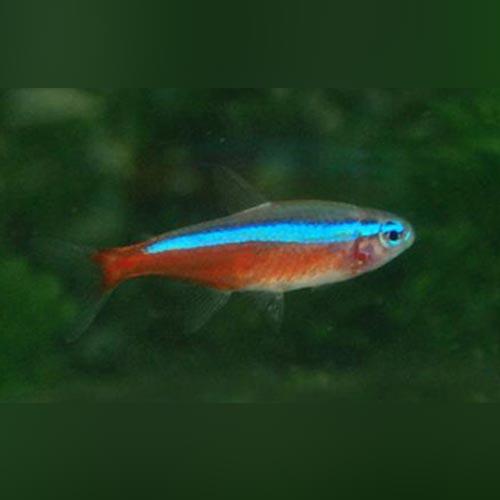
There's a reason Cardinals have been one of the most popular fish in the hobby for decades. That electric blue stripe, the deep red running nose to tail — when you've got a healthy school in a dark-substrate planted tank, the effect is genuinely hard to describe to someone who hasn't seen it.
Cardinal Tetras (Paracheirodon axelrodi) top out around 2 inches. The blue runs along the upper body, the red covers the full length of the belly, and that last part is the easiest way to tell them apart from Neon Tetras, which only show red on the back half. Once you've seen both, you won't confuse them again.
Cardinal Tetra care gets a reputation for being difficult, and we think that's only half true. They're sensitive to swings in water chemistry, and they need a cycled, established tank — not a brand-new setup. But if you get the water right and leave it stable, Cardinals are a very manageable fish that can live 3 to 5 years in a well-kept aquarium.
Where Cardinal Tetras Come From
Cardinals are native to the upper Rio Negro in Brazil and the upper Orinoco basin across Colombia and Venezuela. These rivers are what's called blackwater — stained dark by tannins leaching from fallen leaves and organic matter on the forest floor. Think strong tea, not dirty water.
That chemistry matters for how you keep them. The water in their natural habitat is soft, acidic, and nearly mineral-free. pH below 6.0 is common. General hardness is often near zero. When you set up a Cardinal tank, you're trying to get as close to that as your tap water reasonably allows. The closer you get, the better the fish look and the longer they live.
One thing worth knowing: a large portion of the Cardinals sold in the hobby are sustainably wild-caught through an initiative called Project Piaba. Local fishers in the Amazon collect them instead of clearing the forest for agriculture, because the fish are worth more alive and in the river. Buying Cardinals supports that. It's not a marketing line; it's just how this particular fish's supply chain actually works.
Tank Setup
Size and Swimming Space
Start with a 20-gallon long at minimum. The "long" format matters — Cardinals are active mid-water swimmers, and they need horizontal room to school properly. A 20-gallon tall tank gives you the same water volume but a fraction of the usable swimming space.
Keep a school of at least 8-10. Fewer than that, and they spend most of their time stressed and hiding rather than doing what Cardinals actually do, which is move together in open water and look spectacular.
Substrate and Hardscape
Go dark on the substrate — black sand or fine dark gravel. It makes Cardinals feel secure, and it makes their colors genuinely pop. A light or white substrate does the opposite on both counts.
Driftwood and tangled roots are your best hardscape choices. Indian Almond leaves — also called Catappa leaves — are worth adding. They release tannins as they break down, which naturally soften the water and slightly lower the pH. They also give the tank an authentic blackwater look that suits Cardinals well.
Plants and Lighting
Cardinals come from shaded streams under the forest canopy. They're not built for bright light. Anubias, Java Fern, and Cryptocoryne species are reliable low-light choices that won't require high-intensity lighting. Floating plants like Frogbit add a layer of shade across the surface that Cardinals noticeably prefer.
If you're new to live plants and not sure where to start, we covered our favorite beginner-friendly species in Top 10 Plants for Beginners blog post. Several of them are perfect companions for a Cardinal tank.
Filtration
Keep the flow gentle. Their natural habitat is slow-moving water, and strong currents stress them out. A sponge filter works well. If you're running a hang-on-back, add a spray bar or diffuser to knock down the output. Good biological filtration matters more than water movement here.
Cardinal Tetra Care: Water Parameters
Getting the water right is the whole job with Cardinals. A fish this sensitive to chemistry needs stable conditions more than it needs perfect ones — a steady pH of 6.5 beats a pH that swings between 5.5 and 7.0 every week.
Parameter | Target Range | Notes |
pH | 5.0 – 7.0 | Wild-caught fish do best at 5.0–6.0 |
Temperature | 73°F – 81°F | Consistency matters more than hitting a specific number |
General Hardness (GH) | 1 – 8 dGH | Soft water is strongly preferred |
Carbonate Hardness (KH) | 1 – 4 dKH | Low KH helps maintain acidic pH |
Ammonia | 0 ppm | Zero. Always. |
Nitrite | 0 ppm | Same as ammonia — zero tolerance |
Nitrate | Under 20 ppm | Regular water changes keep this manageable |
For tap water treatment, we use Seachem Prime and have for years. It handles chlorine and chloramine, detoxifies trace ammonia and nitrite, and gives you a real safety net during water changes. It's the one product we'd put on every Cardinal keeper's shelf before anything else.
Feeding Cardinal Tetras
The most important thing to understand about feeding Cardinals is particle size. These are small-mouthed fish. If the food is too large, they'll either ignore it or spit it out. You want something they can swallow cleanly in one pass.
Hikari Micro Pellets are our go-to daily staple for Cardinals. They sink slowly through the water column, which gives the fish time to intercept them, and the size is right. Aquarium Co-Op Nano Pellets and Xtreme Nano (0.5mm) are both solid alternatives.
For color and variety, Xtreme Krill Flakes are worth rotating in several times a week — the carotenoids naturally feed the red pigmentation. Sera GVG-Mix adds a blend of flakes and freeze-dried organisms that keeps things interesting for the fish.
Two to three times a week, offer frozen food. San Francisco Bay Brand Frozen Baby Brine Shrimp is the best thing you can put in a Cardinal tank for growth, conditioning, and color. Frozen Daphnia from the same brand is great for digestive health and provides a different texture and feeding experience.
Compatible Tank Mates
Cardinals are peaceful and spend their time in the mid-water column. They do well in community tanks as long as their tank mates share similar water chemistry needs and won't harass them.
Tank Mate | Why They Work |
Rummy Nose Tetras | Same water requirements, natural schooling companions |
Corydoras Catfish | Peaceful bottom-dwellers with no overlap in space or food |
Harlequin Rasboras | Calm mid-water fish that thrive in soft, acidic conditions |
Bristlenose Plecos | Small, unobtrusive algae-eaters that stay out of everyone's way |
Discus or Angelfish | Work well in larger tanks once Cardinals are fully grown |
Avoid anything large enough to eat a 2-inch fish, anything aggressive, and fin-nippers. Cardinals are not built to defend themselves.
Breeding Cardinal Tetras
We'll be straightforward with you: breeding Cardinals is hard. It's not something that happens accidentally in a community tank. It takes a dedicated setup, precise water conditions, and some patience.
Conditioning: Feed heavily on live or frozen foods — San Francisco Bay Brand Frozen Bloodworms work well — for several weeks before you attempt a spawn. You want the fish in peak condition going in.
Water: pH around 5.5, very low conductivity (20 to 100 microsiemens), temperature between 75°F and 82°F.
Spawning: Use a separate tank kept in complete darkness. Females can produce more than 500 eggs, but pull both parents out immediately after spawning — they will eat every egg if you leave them in.
Fry: Keep the fry tank dark for the first week. Feed infusoria first, then transition to baby brine shrimp as they develop.
It's a rewarding project if you're ready for the challenge. Just go in with realistic expectations.
Acclimation and Health
Bringing Cardinals home is straightforward when you buy locally. Because we keep our Cardinals in Tulsa tap water here at the shop, the fish you take home are already acclimated to local water conditions — you're not asking them to make a dramatic chemistry adjustment when they hit your tank.
Temperature matching still matters, though, and we always recommend taking your time with the transition:
Float the sealed bag in your aquarium for 15 to 20 minutes. You're equalizing temperature here, not water chemistry — keep the bag closed.
Net the fish out of the bag and place them directly into the tank. Don't pour the water from the bag in. Transport water can carry pathogens, and there's no reason to introduce it to a healthy tank.
Quarantine new arrivals for 2 to 4 weeks before introducing them to your main display tank. Cardinals are susceptible to Ich and Neon Tetra Disease, and a quarantine period protects the fish you already have.
That third step is the one most people skip and later regret.
Please note: if you're ever sourcing Cardinals from an online retailer or a shop using very soft or heavily treated water, the transition to Tulsa tap can be genuinely hard on the fish. Buying local removes that risk entirely. It matters more with this species than most.
We carry Cardinal Tetras and can help you build the right school size for your tank. Come in any day — or check the Fish Day list to see if Cardinals are in this week.
See This Week's Fish: finsforgrins.com/newfishday
Visit Us: 1312 N. Elm Pl., Broken Arrow | Mon–Fri 10am–7pm, Sat–Sun 10am–6pm
Cardinal Tetra FAQ
How do I tell Cardinal Tetras apart from Neon Tetras?
Look at the red stripe. On a Cardinal, the red runs the full length of the body from nose to tail. On a Neon, it only covers the back half. Put them side by side once and you'll never mix them up again.
How many Cardinals should I keep?
Eight minimum, ten or more if you can swing it. A larger school means calmer, more confident fish that actually display in open water rather than hover near cover. A group of four or five usually results in stressed, skittish fish that don't show their colors well.
Why are my Cardinals fading or losing color?
Almost always a water quality issue. Check ammonia, nitrite, nitrate, and pH first. Fading can also happen from too-bright lighting without enough cover, groups that are too small, or a tank that hasn't fully cycled. Cardinal Tetra care starts and ends with stable water.
Can Cardinals live with shrimp?
Adult dwarf shrimp like Cherry Shrimp and Amano Shrimp are fine. Baby shrimp are fair game — Cardinals will pick them off. If breeding shrimp is the goal, keep them in a separate tank.
Do Cardinal Tetras need live plants?
Not strictly, but they do meaningfully better with them. Plants reduce stress, provide cover, and help manage light intensity. A heavily planted tank with Cardinals in it is a completely different experience than a bare one.
Are Cardinal Tetras hard to keep?
Harder than Neon Tetras, easier than Discus. The challenge is water chemistry — they need a stable, established tank and don't handle swings well. Get that part right and the day-to-day care is straightforward.
What temperature do Cardinal Tetras need?
73°F to 81°F. Consistency is more important than landing on an exact number. A sudden temperature drop is one of the fastest ways to trigger an Ich outbreak in a Cardinal tank.
How long do Cardinal Tetras live?
Three to five years with good water quality and consistent care. Some keepers report longer with very stable blackwater setups.
Cardinals reward the effort you put into the setup. Get the water stable, give them a real school, and plant the tank well — and you'll have a display piece that stops people mid-conversation every time they walk past it.
If you're planning a Cardinal tank and want to talk through the setup before you buy, come see us. We're happy to look at your water parameters, talk through stocking, and make sure you're set up for success before the fish come home.
Happy Fishkeeping,
Ray & Michelle
Fins For Grins