
The Galaxy in Your Tank
In 2006, a small fish nobody in the Western hobby had ever seen showed up in the trade almost overnight. It came out of Myanmar — specifically, a handful of shallow, high-altitude ponds near the town of Hopong in Shan State — and the moment photos hit the forums, the fish world lost its mind a little. Collectors rushed into the export market so
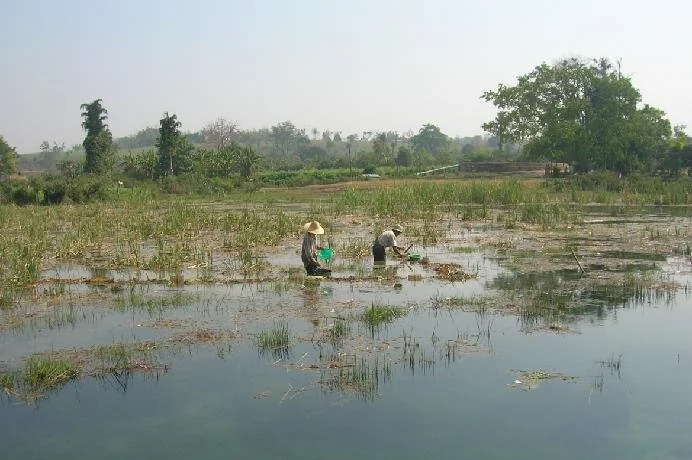
aggressively, that within months, people were genuinely asking whether the species might go extinct before most hobbyists ever had a chance to keep one. Myanmar's Department of Fisheries shut down all exports while biologists went in to assess the wild population. It turned out the fish were more widespread than initially thought, the export ban was lifted, and captive breeding quickly took over. Today, virtually every CPD in the hobby is tank-raised.
All of that drama over a fish barely three-quarters of an inch long.
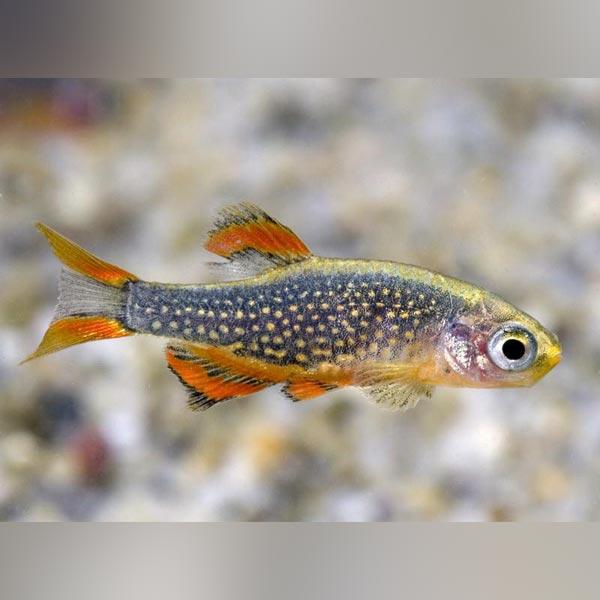
Look at one under good light, and you'll understand why. The body is a deep, almost electric blue, covered in small pearlescent spots that sit on the surface like tiny stars. The fins — especially on the males — carry bold red or orange bands that cut against the blue in a way that stops you mid-stride in front of the tank. It's a lot of fish in a very small package, and it photographs terribly because the camera can't quite capture the iridescence. You have to see it in person.
We didn't open a fish store because we thought it would be a good business — we opened one because we couldn't find the store we wanted. That kind of thing only happens when fish have been in your blood for a long time. Celestial Pearl Danios are one of those species you come back to. Not because they're easy — they have opinions about their water and their tank setup — but because when you get the conditions right and watch a healthy colony move through a well-planted tank, it's genuinely one of the better things this hobby has to offer. They're also consistently one of the most popular fish we carry at Fins For Grins, and it's not hard to understand why. Every time a new shipment comes in, they're the first tank people stop at.
They live three to five years in captivity when well cared for. That's not a long time, but it's long enough to get attached.
This guide covers everything you need to keep them thriving and, if you're up for it, breeding them. CPDs breed readily in captivity, which matters — because a fish this collectible is one you want to source responsibly. Those ponds near Hopong are still there. What happens in your living room is more connected to them than you might think.
Let's start with what they need.
Whether you're a first-time keeper or a seasoned hobbyist, this Celestial Pearl Danio care and breeding guide covers everything from tank setup to raising fry.
Creating a Stable Home
The first thing to understand about Celestial Pearl Danios is that they come from a very specific kind of environment — shallow, heavily vegetated ponds sitting at elevation in Myanmar and northern Thailand. That matters because it tells you something important: these are not fish that evolved in big, fast-moving water. They want stability, cover, and cooler temperatures than most tropical fish on the market.
A 10-gallon tank will house a small group, but we'd push you toward a 20-gallon if you can manage it. Not because CPDs need the swimming room — they don't range widely — but because larger water volumes are more forgiving. Parameters stay steadier, temperature swings are smaller, and a small mistake doesn't become a crisis overnight. If you're serious about keeping a colony or getting into breeding, the 20-gallon is the right call from the start.
For water parameters, aim for a pH right around neutral — 6.5 to 7.5 is the workable range, but 7.0 is your target. Hardness should stay in the 2 to 10 dGH range — soft to moderately hard. If you're in the Tulsa area, our tap water runs hard, but CPDs are more adaptable than their reputation suggests and we've had consistent success using straight tap water treated with Seachem Prime. Prime dechlorinates your water and also neutralizes chloramine, which is important because chloramine doesn't off-gas the way chlorine does — it has to be chemically neutralized. Don't skip the dechlorinator, and don't assume your water is safe just because it sat out overnight.
Temperature is where a lot of keepers get tripped up. CPDs are listed as tropical fish, but they prefer the cooler end of that spectrum — 71 to 79°F, with the sweet spot sitting right around 72 to 75°F. Push them much warmer than that consistently and you'll start to see it in their color and their behavior before you see anything else. A reliable thermometer isn't optional with this species.
One more thing before we move on: CPDs are jumpers. It doesn't come up in a lot of care guides but it should — these fish will find an opening in a lid and use it. Make sure your tank is covered and that any gaps around filter intakes or airline tubing are closed off. Losing a fish to an overnight jump is entirely preventable.
When you bring fish home — whether from us or anywhere else — float the sealed bag in your tank for about 15 minutes to equalize the temperature. Then net the fish directly from the bag into your tank. Do not pour the bag of water in. Bag water from a fish store carries its own chemistry, and adding it to your established tank introduces variables you don't need. The fish go in, the bag water does not.
One more thing worth saying plainly: stable matters more than perfect. A tank sitting at a consistent 74°F and 7.2 pH is going to produce healthier fish than one that swings between 72 and 78°F chasing an ideal number. Get it in the right range and then leave it alone.
Building the Right Environment
If there's one thing that separates a CPD tank that works from one that doesn't, it's plants. These fish did not evolve in open water. In the wild, they live in dense vegetation, and that instinct doesn't disappear just because they were born in a fish room. A sparse tank with a few decorations and an open midwater is going to produce shy, washed-out fish that hide constantly. A heavily planted tank is going to produce bold, colorful fish that actually behave like CPDs are supposed to behave.
You don't need an expensive aquascape to make this work. Java moss is inexpensive, nearly indestructible, and gives CPDs exactly what they're looking for — dense, fine-textured cover they can move through and spawn in. Stem plants like hornwort or water sprite fill out the midwater and background quickly. If you want something more structured, dwarf hairgrass or Monte Carlo on the substrate looks sharp against a dark bottom and complements the fish's coloration well.
Speaking of substrate — go dark. A dark substrate does two things: it reduces light reflection off the bottom of the tank, which lowers stress, and it makes the fish's blue and white coloration stand out in a way that light-colored gravel simply won't. Sand or fine dark gravel both work. This is one of those details that costs nothing extra and makes a visible difference.
Lighting should be moderate and diffused. Floating plants like frogbit or salvinia are useful here — they break up the light naturally, create shaded areas the fish gravitate toward, and add to the overall sense of cover without requiring any hardscape work. Bright, unbroken light over an open tank is the opposite of what these fish want.
For filtration, gentle flow is non-negotiable. CPDs are small and they come from still or very slow-moving water. Our go-to recommendation for a CPD display tank is a quality HOB like the Sicce Aqua Filtra or the Seachem Tidal. The Sicce comes with a pre-filter built in, which is one of the reasons we like it for this application — it protects small fish right out of the box without any modification. If you're running the Seachem Tidal or another HOB, add a pre-filter sponge over the intake to achieve the same result. A sponge filter works well as a secondary filter, or in a dedicated breeding setup, but for your main display tank, you want something with a bit more capacity behind it.
Get the plants in, get the flow right, and these fish will show you what they're actually capable of.
Picking the Right Neighbors
CPDs are peaceful fish, but peaceful doesn't mean they'll thrive with just anybody. Size matters here more than temperament. These are small fish — we're talking three-quarters of an inch fully grown — and anything large enough to view them as a snack is going to keep them stressed and hiding regardless of how docile that tankmate is supposed to be. A curious angel or a mid-sized cichlid doesn't have to be aggressive to be a problem. Presence alone is enough.
Keep CPDs with other nano fish. Small rasboras, ember tetras, and chili rasboras all work well. Pygmy Corys are a natural fit on the bottom — they stay small, they're peaceful, and they won't compete for the same space the CPDs are using. Neocaridina shrimp are an excellent addition too — they occupy a completely different niche in the tank, they're interesting in their own right, and a well-planted CPD tank is already set up to support a healthy shrimp colony.
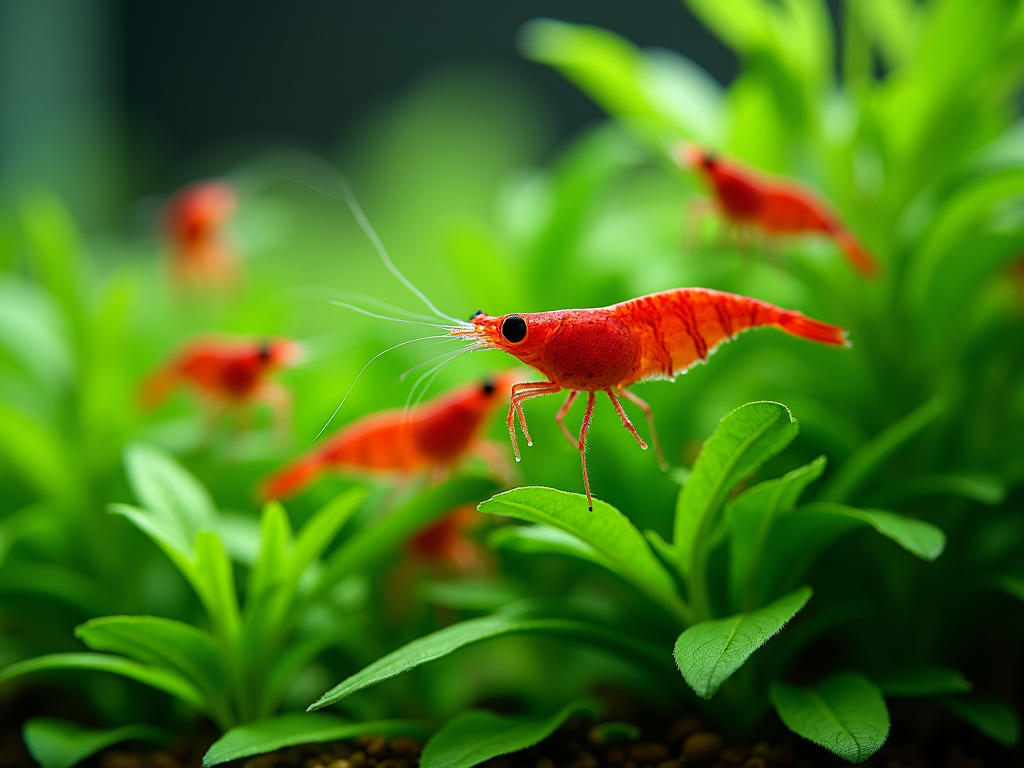
If you want to go deeper on shrimp keeping, we put together a full guide right here: Cherry Shrimp Care for Beginners: Everything You Need to Know.
Group size matters as much as tankmate selection. The minimum is six, but six is really just the floor. A group of ten to fifteen CPDs behaves completely differently than a group of six — they're bolder, more active, and spend significantly more time in open water. If you've ever seen CPDs described as shy or reclusive and wondered what the fuss was about, the answer is almost always that someone was keeping too few of them.
One trick worth knowing: dither fish. Adding a small, bold species that naturally occupies open water — ember tetras are a good example — can draw shy CPDs out from the plants. Fish take social cues from each other, and when they see other fish moving confidently through open water, they follow. It sounds almost too simple, but it works.
Feeding
CPDs are not picky eaters, but they are small ones. That distinction matters more than people realize. A standard-sized flake that works fine for a community tank is going to be too large for a CPD to eat comfortably, and fish that can't eat properly don't color up, don't breed, and don't thrive. Crushing your flake food between your fingers before it hits the water takes two seconds and makes a real difference.
For a staple diet, high-quality micro pellets are your foundation. Two products we carry and recommend without hesitation are the Aquarium Co-Op Magic Small Fish Feed and Xtreme Li'l Fella. The Magic Feed is an ultra-fine suspended food that stays in the water column and works beautifully in tanks with very small or mixed nano fish. The Li'l Fella is a 1mm semi-floating pellet built around krill, shrimp, squid, and spirulina — the protein profile is excellent and the paprika and spirulina in the formula actively support the color you're trying to get out of these fish. Both are appropriate for CPDs. If you're choosing one as a daily staple, the Li'l Fella is hard to beat.
Where CPDs really respond is live and frozen food. Baby brine shrimp, daphnia, cyclops, and microworms are all excellent options and the difference they make in color and conditioning is not subtle. This is especially true if you're planning to breed them — we'll get into that in Part II — but even for a display tank, rotating live or frozen food into the feeding schedule two or three times a week will produce noticeably better fish than dry food alone ever will.
Feed small amounts two to three times daily rather than one large feeding. CPDs are grazers by nature and they do better with smaller, more frequent meals. The goal is food gone in two minutes or less. Anything sitting on the bottom after that is fouling your water, and a small tank with uneaten food in it can go sideways faster than you'd expect.
Keeping Them Healthy
Consistency is the word that matters most with CPD maintenance. These are not fish that bounce back easily from neglect or swings in water quality. Get them into a stable routine and they'll reward you for it. Let that routine slip, and you'll see it in their color and behavior before your test kit even confirms something is wrong.
Water changes are the foundation of that routine. A weekly change of 20 to 30 percent using temperature-matched water is the standard, and it's non-negotiable. Cold water dumped into a warm tank is a stress event, and repeated stress events in a small tank compound quickly. Fill your change water ahead of time, get it to within a degree or two of tank temperature, and treat it with Seachem Prime before it goes in. Same process every week.
Keep an eye on the temperature year-round. CPDs are sensitive to heat in ways that catch people off guard, especially during Oklahoma summers. A tank sitting in a warm room without a reliable thermometer can creep up past 78 or 79°F without obvious signs until the fish start showing stress. Check your temperature regularly. If your tank runs warm in summer, a small fan directed across the water surface can drop the temperature a few degrees without any additional equipment.
Common problems with CPDs almost always trace back to one of three things: temperature too high, not enough cover, or a group that's too small. Stress-induced color loss and persistent hiding are the symptoms. Before you start treating for disease, ask yourself whether the tank conditions are actually right. More often than not, fixing the environment fixes the fish.
Part II: Celestial Pearl Danio Care and Breeding Guide: What You Need to Know
Telling Them Apart
Before you can breed CPDs intentionally, you have to be able to tell the males from the females. The good news is that once you know what you're looking for, it's not difficult — even in a store tank.
Males are the showoffs. They carry the deeper, more saturated blue on the body and the boldest red or orange banding on the fins. When two males are posturing near each other — which happens regularly in a healthy group — the colors intensify further. If you're standing in front of a tank trying to pick fish and one stops you mid-reach because of how it looks, it's almost certainly a male.
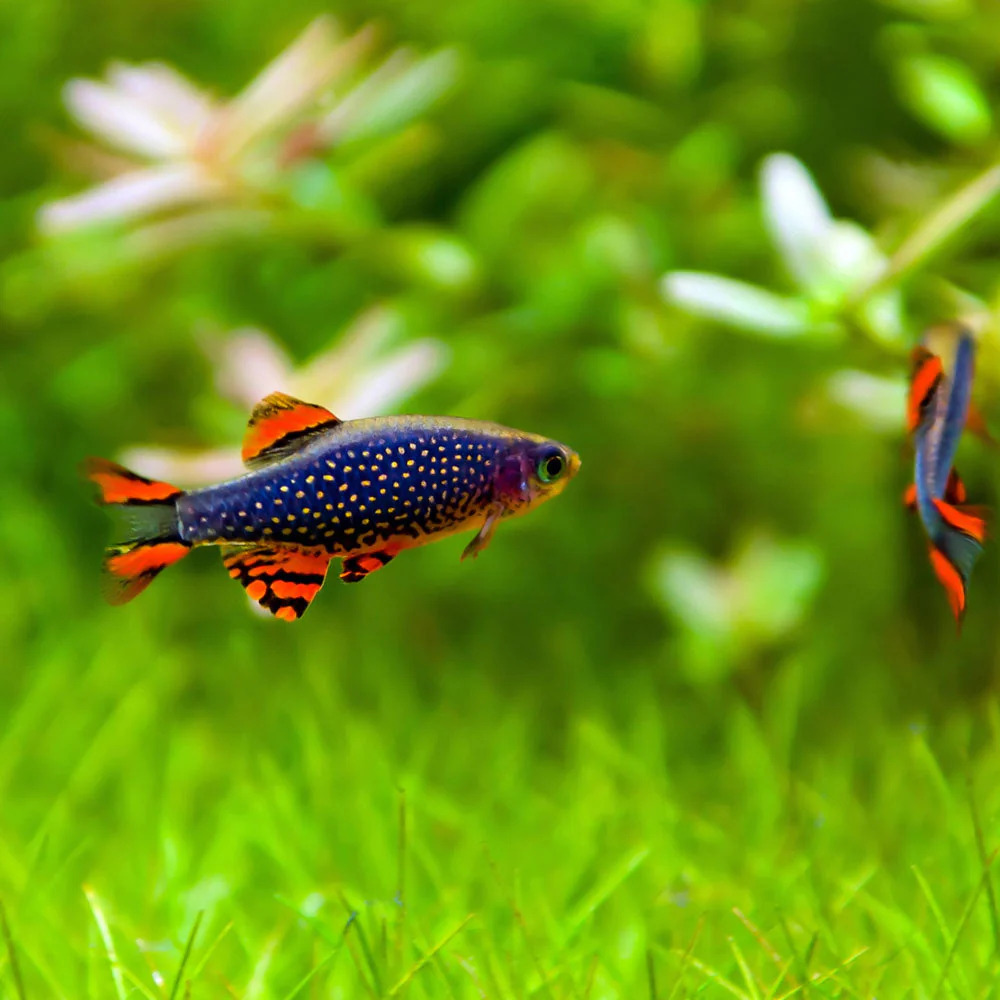
Females are subtler. The body color is present but softer, and the fin banding is less dramatic. What females have that males don't is a rounder, fuller belly — especially when they're well-fed and in good condition. A female that's ready to spawn will look noticeably plump compared to the males, and if you look closely near the base of the tail you'll often see a small dark spot that becomes more visible as she comes into condition.
One practical note for buying fish: don't try to purchase an all-male or all-female group. You want a mixed group, and you want more females than males. A ratio of one male to two or three females reduces aggression and distributes the attention males pay to females across the group. A single female being pursued constantly by multiple males without anywhere to retreat is a fish under chronic stress, and chronic stress in a small tank ends one way.
Getting Them Ready
The good news about breeding CPDs is that they don't require elaborate equipment or precise conditions to spawn. What they require is stability, good food, and a setup that gives them somewhere to deposit eggs that isn't immediately accessible to their own mouths.
A dedicated breeding tank doesn't need to be large — a 10-gallon is plenty. Keep it simple: bare bottom, sponge filter, and as much Java moss or spawning mop as you can reasonably fit in it. The bare bottom matters because it makes it easier to spot eggs and monitor what's happening. The Java moss or mop matters because CPDs are egg-scatterers and they need fine-textured material to deposit eggs into. Without it they'll still spawn, but egg survival drops significantly.
Conditioning is where a lot of people skip steps and then wonder why their fish aren't spawning. Feed your breeding candidates heavily on live and frozen foods for one to two weeks before moving them into the breeding tank. Baby brine shrimp and daphnia are the workhorses here. You're looking for females that are visibly plump — round enough that the difference from the males is obvious at a glance. That's the signal that she's carrying eggs and ready to go. Don't rush this part. A well-conditioned pair will spawn reliably. An underconditioned pair will disappoint you.
There's no single right way to breed CPDs, and the hobby has produced some creative solutions to the egg-eating problem. Some keepers use egg catchers positioned under spawning mops to collect eggs as they fall. Others run more elaborate setups that pump water — and eggs — from the breeding tank into a separate rearing vessel automatically. Both work. So does simply swapping the spawning mop into a separate hatching tank every few days before the adults have time to find everything.
The method that works best is the one that matches your experience level and how much time you want to put into it. If you're new to breeding egg-scatterers, start simple — a spawning mop and a second tank to move eggs into is all you need to get fry on the ground. You can get more sophisticated as you go.
What Actually Happens
CPDs spawn differently from a lot of fish people are used to. There's no dramatic courtship ritual, no nest building, no obvious moment where you can point and say, "there it is." What you get instead is persistent, low-key activity that happens throughout the day in small increments — a male chasing a female into the moss, a brief shimmy, and then it's over. A few eggs get deposited, and both fish go about their business like nothing happened. Blink and you'll miss it.
That's actually how it's supposed to work. CPDs are continuous spawners rather than event spawners. A healthy, well-conditioned pair in the right conditions won't produce a single dramatic spawn — they'll produce small batches of eggs steadily over days and weeks. The numbers add up faster than you'd expect.
Some keepers report that a modest water change with slightly cooler water can kick off spawning activity — the same principle behind simulating a cool season rainfall. It's worth trying if your fish seem conditioned but aren't producing.
What you're watching for is female behavior. A female that's ready to spawn will be actively pursued by males and will spend time moving through the moss or mop rather than hiding from the attention. Eggs are small, clear to slightly yellowish, and will be scattered through the spawning media rather than deposited in a single location. Don't expect to find them easily — you're more likely to find fry a week later than to spot individual eggs in real time.
Remove the adults or the spawning media within 24 to 72 hours. CPDs will eat their own eggs without hesitation and without apparent remorse. They're not bad parents — they're just fish.
The Waiting Game
Once you've moved the eggs — whether on a mop, in a clump of moss, or via whatever method you're using — the job shifts from active management to patience and water quality. There isn't much you can do to speed up what happens next, but there's plenty you can do to ruin it.
Keep the hatching tank dim. Light stress on eggs and newly hatched fry is real, and a bright tank over a batch of CPD eggs is an unnecessary variable. A piece of dark cardboard over part of the lid costs nothing and makes a difference. Aeration should be gentle — a slow sponge filter or a single airstone turned down low. You want just enough movement to keep the water oxygenated without tumbling the eggs around the bottom.
Eggs typically hatch somewhere between two and seven days. Newly hatched fry are almost comically small. They'll spend the first day or two attached to surfaces — the glass, the moss, whatever is nearby — absorbing their yolk sac before they become free swimming. Don't try to feed them during this stage. They're not ready for it and uneaten food in a small fry tank will foul the water fast.
The Smallest Mouths in the Hobby
Feeding CPD fry is where a lot of first-time breeders hit a wall. The fish are tiny when they hatch — genuinely, almost invisibly small — and their first foods need to match that. Standard fry foods that work fine for livebearer fry or even small egg layer fry are going to be too large for newborn CPDs. Get this wrong and the fry will starve while surrounded by food they can't eat.
For the first week after they become free swimming, you need microscopic foods. Infusoria is the traditional answer and it still works — a culture of green water or a commercial infusoria starter will get you through the first critical days. Powdered fry foods formulated for egg layers are a practical alternative if you don't want to maintain a live culture, but check the particle size carefully. If it's not fine enough to stay suspended in the water column, it's not fine enough for newborn CPDs.
The Aquarium Co-Op Magic Fry Food is worth having on hand specifically for this stage. The particle size is appropriate, it stays suspended rather than sinking straight to the bottom, and fry that are too small to chase food down will still encounter it as it drifts through the water.
As the fry grow — typically by the end of the first week — you can begin introducing baby brine shrimp. Freshly hatched brine shrimp nauplii are ideal, and if you've never hatched your own before, the Ziss Brine Shrimp Hatchery makes it about as
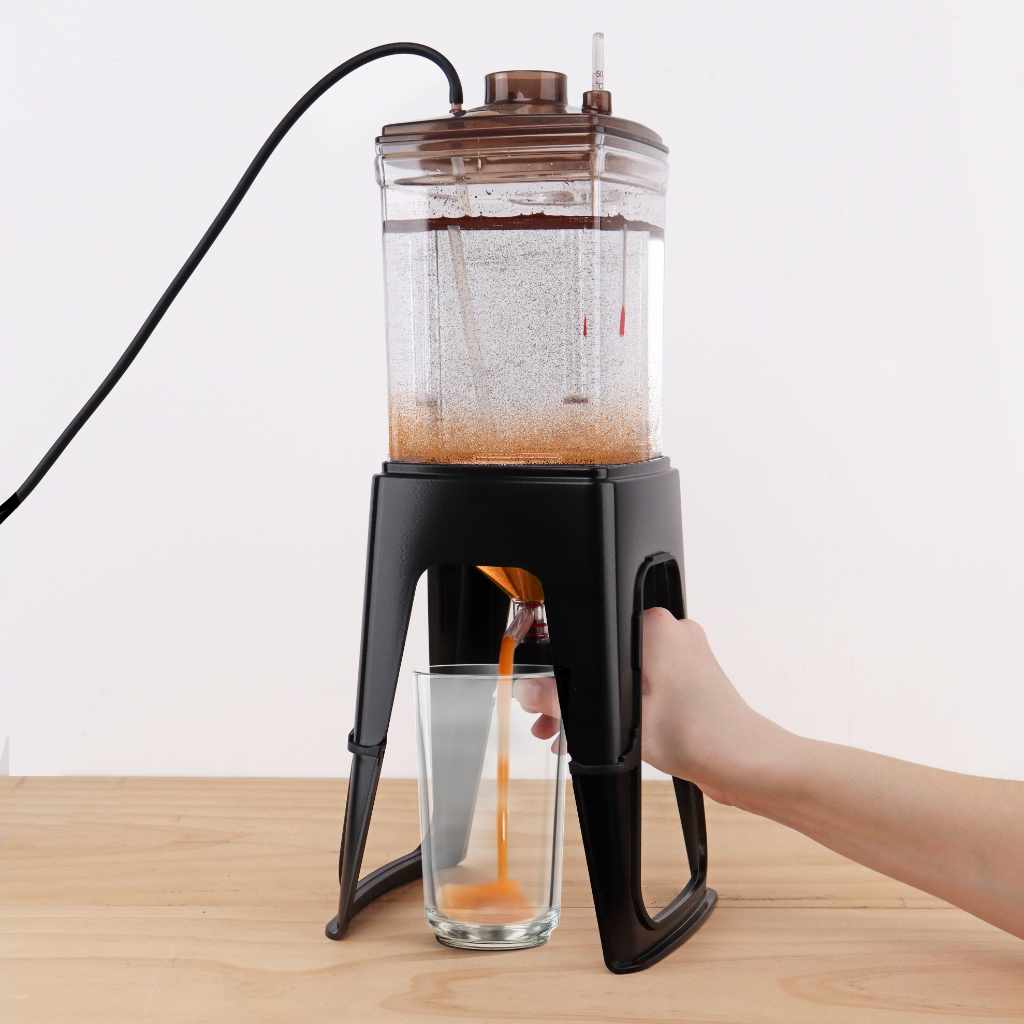
straightforward as it gets. It's a purpose-built unit with a needle-type drain valve at the bottom that lets you harvest newly hatched shrimp without the mess or guesswork of a DIY bottle setup. You add salt water, add eggs, give it 24 to 36 hours with an airstone running, then use a light near the bottom to attract the nauplii and drain them straight into a fine net. Clean, simple, repeatable. We carry it at Fins For Grins and it's one of those products that pays for itself the first time you use it. Fry that are getting live baby brine shrimp regularly will develop faster and color up earlier than fry raised on prepared foods alone. Once you see them actively hunting the brine shrimp rather than just bumping into them, you're through the hardest part
Water changes during this stage need to be small and frequent — five to ten percent daily rather than a large weekly change. The fry are sensitive to parameter shifts and a large water change in a small tank can be enough to set them back. Use a piece of airline tubing with a small valve to control the flow — slow enough that you're not accidentally siphoning fry along with the water.
When Things Don't Go According to Plan
Breeding CPDs is rewarding but it's not always clean. Here are the most common problems and what to do about them
The first is eggs that don't hatch. White eggs are either unfertilized or fungus-infested, and fungus spreads quickly in a small enclosed tank. Remove them as soon as you spot them — a turkey baster or a pair of fine tweezers works well for this. If you're seeing a large percentage of white eggs consistently, the most likely culprit is water that's too hard or a pH that's drifted too high. Both interfere with fertilization and egg development.
The second is fry that disappear. You saw eggs, you were patient, and now there's nothing in the tank. The adults got them. This is the most common frustration with CPDs, and the solution is mechanical rather than behavioral — the fish are doing what fish do. Separate the eggs from the adults sooner, use the spawning mop method to move the media quickly, or look into an egg-catcher setup if you want to get more systematic about it. Waiting longer than 72 hours with adults in the same tank as eggs is a gamble that rarely pays off.
The third is low yield over time. If your fish were spawning and have slowed down or stopped, the answer is almost always conditioning. Go back to heavy live and frozen feeding for a week or two, make sure your females are visibly full, and give the breeding tank a small water change to reset the environment. CPDs respond to good food faster than almost anything else you can do.
One last thing worth saying: CPDs breed readily in captivity, and that's part of why we feel good about keeping and selling them. The more hobbyists successfully breeding this species at home, the less pressure on those ponds near Hopong. If you get to the point where you're producing consistent numbers of fry, that's something worth being proud of — and if you're producing more than you can handle, reach out to us. We'd love to talk.
Happy Fishkeeping,
Ray & Michelle.